Introduction: Wealth Doesn’t Come from Big Moves—It Comes from Time
Most people think building wealth requires a high salary, risky bets, or perfect timing.
It doesn’t.
In reality, wealth is built quietly—almost boringly—through one powerful force: consistency + time.
That’s where the power of compounding comes in.
It’s not dramatic. It doesn’t go viral. But over years, it can turn small, regular investments into serious money.
And the earlier you start, the less effort it actually takes.
What Is Compounding (And Why It’s So Powerful)
Compounding is simple:
You earn returns on your investment—and then those returns start earning returns too.
This cycle repeats over time, creating exponential growth.
That’s why:
- ₹5,000/month invested for 25 years can beat ₹15,000/month invested for 10 years
- Time matters more than amount
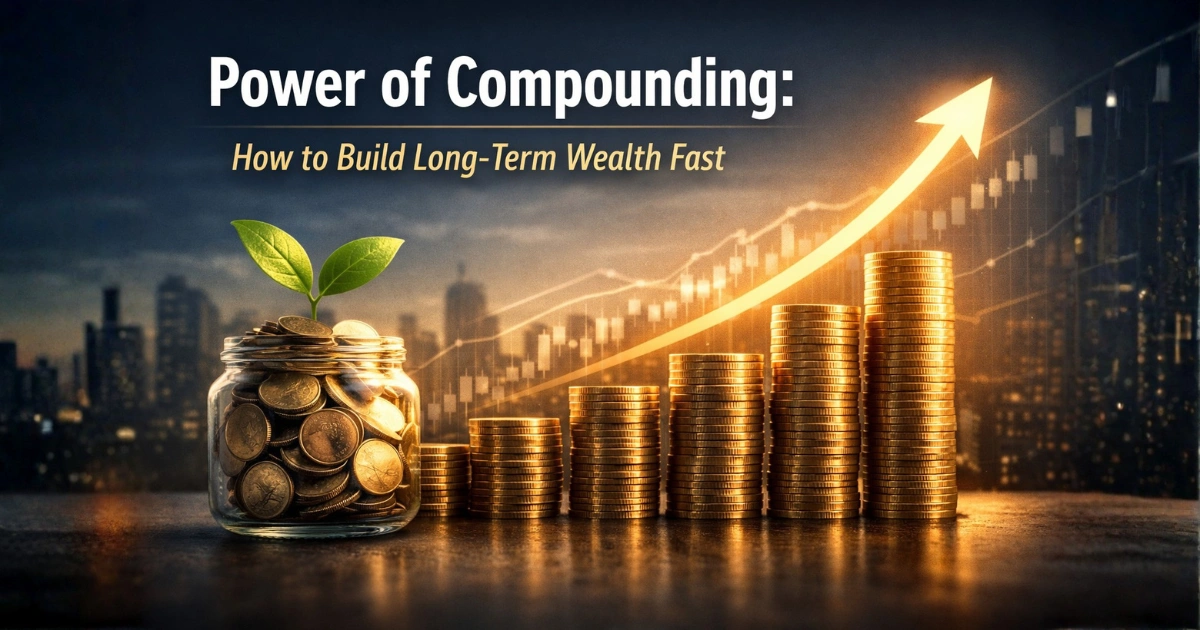
The power of compounding can gradually turn a small investment into a significant amount of wealth as the interest and returns you earn are reinvested.
👉 If you want to understand how compound interest works mathematically, you can explore this detailed explanation on Investopedia.
But there’s a catch—it works both ways.
Just like it helps grow your savings over time, it can also make your debt swell quickly if you’re not careful.
Why Starting Early Changes Everything
Start Early = Less Stress, More Wealth
Let’s compare two people:
- Aman starts investing at 25
- Rohit starts at 35
Even if Rohit invests more per month, Aman often ends up with more wealth.
Why?
Because compounding had more time to work.
When you start the investment journey early, you give your money the one thing it needs most—time.
👉 According to long-term data insights shared by Securities and Exchange Board of India, early and disciplined investing significantly improves wealth outcomes.
Real Insight
The first 10 years of investing often contribute more to your final wealth than the last 10 years.
That’s the hidden advantage most people ignore.
How to Use Compounding to Build Long-Term Wealth
1. Invest Consistently (Even When It Feels Small)
You don’t need a big lump sum.
Start with what you can.
- ₹2,000/month
- ₹5,000/month
- ₹10,000/month
What matters is consistency.
To grow savings, invest consistently, and build lasting wealth for retirement, automate your investments.
👉 You can start SIPs easily through platforms like Groww or Zerodha.
Treat it like a non-negotiable expense.
2. Reinvest Everything (Don’t Interrupt the Cycle)
Compounding only works if you let it.
That means:
- Don’t withdraw returns early
- Reinvest dividends
- Avoid frequent switching
Every time you pull money out, you reset the compounding engine.
3. Choose Growth-Oriented Assets
Not all investments compound equally.
If your goal is long-term wealth, focus on assets that grow:
- Equity mutual funds
- Index funds
- Stocks (if you understand them)
For stability and tax benefits, include:
- PPF (Public Provident Fund)
- EPF (Employee Provident Fund)
- ULIPs (for specific long-term goals)
👉 You can explore government-backed schemes like PPF directly via State Bank of India or the official Income Tax Department of India for tax benefits.
You can grow wealth with schemes like PPF, EPF, ULIPs, and more—but balance them with growth assets.
4. Increase Contributions Over Time
Your income will grow.
Your investments should too.
Every year:
- Increase SIP by 5–10%
- Invest bonuses instead of spending all
This small habit dramatically accelerates compounding.
Understanding the Rule of 72 (Your Quick Shortcut)
The Rule of 72 helps you instantly estimate how your investments grow with compound interest—quick, accurate & reliable.
Here’s how it works:
- Divide 72 by your expected return rate
- That gives you the number of years to double your money
Example:
- 72 ÷ 12% = 6 years
- Your money doubles every 6 years
👉 You can also test this using online calculators from Moneycontrol.
It’s a simple mental model, but incredibly useful for decision-making.
Common Mistakes That Kill Compounding
1. Waiting for the “Right Time”
There is no perfect time.
Delaying by even 2–3 years can cost lakhs in the long run.
2. Breaking Investments Frequently
- Panic selling
- Switching funds too often
- Withdrawing early
All of these interrupt compounding.
3. Ignoring Inflation
If your returns don’t beat inflation, your wealth isn’t really growing.
👉 You can track inflation trends through Reserve Bank of India reports.
This is why relying only on fixed deposits is not enough.
4. Underinvesting for Too Long
Starting small is good.
But staying small forever is not.
Increase your investment as your income grows.
Practical Action Plan (Start Today)
If you want to actually apply this, keep it simple:
- Step 1: Start a SIP today (any amount)
- Step 2: Choose a mix of equity + safe instruments
- Step 3: Automate investments
- Step 4: Increase contribution every year
- Step 5: Stay invested for 10+ years minimum
That’s it.
No complicated strategy required.
Pro Tips Most People Learn Too Late
- The first ₹1 lakh is the hardest—after that, compounding speeds up
- Avoid checking your portfolio daily—focus on long-term
- Consistency beats intelligence in investing
- Time in the market matters more than timing the market
Conclusion: Compounding Rewards Patience, Not Perfection
If you start early, stay consistent, and let your money grow uninterrupted, compounding will do the heavy lifting.
Years from now, what feels like small steps today will turn into something significant.
Start now. Not when you feel ready.