
Startup Funding Trends 2026: What Investors Really Want
Introduction: The Rules of Startup Funding Have Changed
A few years ago, you could raise money with a bold pitch, a slick deck, and a big vision.
In 2026? That’s not enough.
Investors aren’t chasing hype anymore. They’re chasing proof.
Today, investors now demand capital efficiency, proven business models, and measurable outcomes over moonshot promises.
If you’re building a startup right now, understanding these shifting expectations isn’t optional—it’s survival.
The Shift: From Growth-at-All-Costs to Profitable Growth
For years, startups were rewarded for growth at any cost.
That era is fading.
What investors care about now
In 2026, the focus has shifted to:
- Sustainable growth
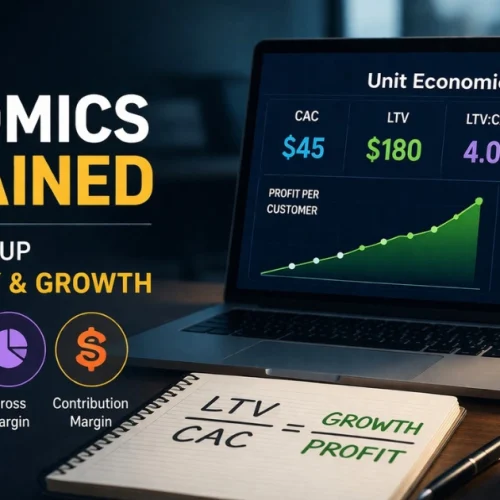
- Strong unit economics
- Clear profitability
👉 Insights from Harvard Business Review highlight how modern investors prioritize long-term sustainability over aggressive scaling.
This is where capital-efficient models are winning.
AI Startup Fundraising Is Dominating the Market
AI is leading funding in 2026.
The reality behind AI funding
AI startups are securing a massive share of VC capital—but only when they solve real problems.
👉 Tech giants like OpenAI and cloud platforms like Google Cloud are accelerating AI adoption across industries.
What investors expect
- Clear use cases
- Business impact
- ROI-driven solutions
AI without execution? Ignored.
Deeptech, Fintech & Climate Tech Are Gaining Serious Attention
Beyond AI, investors are focusing on sectors solving real-world challenges.
High-interest sectors in 2026
- Deeptech
- Fintech
- Climate tech
- EV ecosystem
- Healthcare
👉 Investment trends tracked by McKinsey & Company show rising capital flow into sustainability and advanced technologies.
These sectors align with long-term global demand—not short-term hype.
Early-Stage Funding Is Rising—But With Conditions
Early-stage funding is active—but expectations are stricter.
What investors want early
- Real users
- Product validation
- Revenue signals
Investors expect on-chain usage data, active users, or actual revenue numbers—not just follower counts.
👉 Platforms like Y Combinator emphasize traction over ideas in early-stage funding.
Late-Stage Funding: More Selective Than Ever
Late-stage funding has become more cautious.
Why?
- Overvaluation concerns
- Focus on profitability
- Risk reduction
👉 Data platforms like Crunchbase show fewer but higher-quality late-stage deals.
What this means
If your business isn’t sustainable:
- Funding slows
- Valuations drop
- Growth stalls
What Investors Are Really Looking For in 2026
Let’s simplify.
1. Capital Efficiency
Startups must prove they can grow without excessive spending.
2. Proven Business Models
Investors want paying customers—not just ideas.
3. Measurable Outcomes
Everything must be backed by data.
👉 Analytics tools like Tableau help startups present clear performance metrics.
4. Clear Problem-Solving
Startups must solve specific problems with real outcomes.
A Real-World Scenario: Two Startups Pitching
Startup A:
- Big vision
- No revenue
- High burn
Startup B:
- Real customers
- Steady revenue
- Strong margins
In 2026, Startup B wins.
👉 Market intelligence from CB Insights consistently shows investors backing execution over hype.
Action Steps: How to Raise Funding in 2026
1. Focus on unit economics early
2. Build real traction
3. Show capital efficiency
4. Solve real problems
5. Use data-backed storytelling
Common Mistakes Founders Are Still Making
- Chasing trends without execution
- Overhyping AI
- Ignoring profitability
- Relying on vanity metrics
👉 Many of these pitfalls are highlighted in startup case studies by Sequoia Capital.
Pro Tips for Standing Out in 2026
- Start lean, scale smart
- Focus on paying customers
- Track metrics weekly
- Build sustainable models
- Be honest with your numbers
Conclusion: Funding Isn’t Easier—It’s Smarter
Startup funding in 2026 isn’t gone—it’s evolved.
Investors want:
- Sustainable growth
- AI-driven impact
- Capital-efficient execution
👉 The smartest founders are using insights from platforms like Andreessen Horowitz to align with modern investment expectations.
If you adapt, funding becomes easier.
If you don’t, even a great idea won’t be enough.
Build smart. Prove value early. Let your numbers speak.