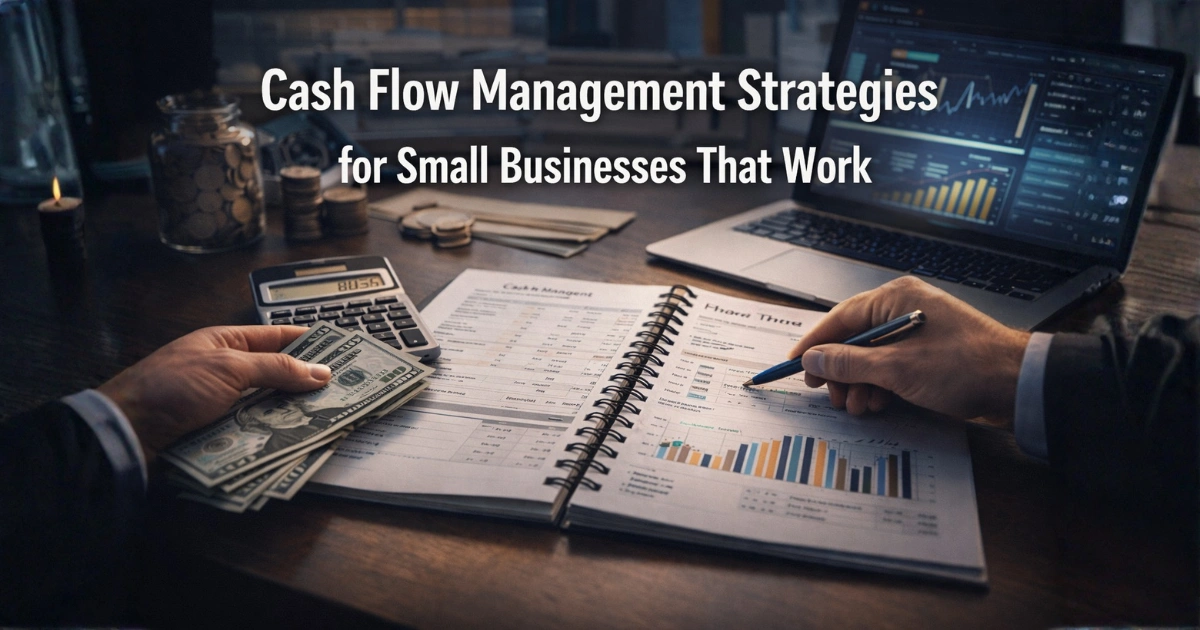
Introduction: Profit Doesn’t Save a Business—Cash Does
You can be profitable on paper… and still run out of money.
That’s the harsh reality many small business owners discover too late.
Bills don’t wait. Salaries don’t wait. Rent definitely doesn’t wait.
This is why cash flow is about planning, analyzing, and awareness—not just tracking numbers.
If you get this right, your business becomes stable. If you ignore it, even a growing business can collapse.
What Cash Flow Management Really Means
Cash flow management is about:
- Tracking money coming in
- Tracking money going out
- Ensuring operational stability
👉 Tools like QuickBooks and Zoho Books help businesses build a clear picture of their cash in real time.
Build a clear picture of your cash
If you’re not reviewing numbers weekly, you’re guessing.
Learn the Fundamentals of Small Business Cash Flow Management
Three core levers:
- Accelerate receivables
- Delay payables
- Maintain cash reserves
👉 Financial best practices recommended by Investopedia emphasize balancing inflows and outflows effectively.
Strategy #1: Get Paid Faster (Accelerate Receivables)
Slow payments kill cash flow.
What works
- Immediate invoicing
- Digital payments (UPI, cards, gateways)
- Clear deadlines
- Early payment incentives
👉 Payment platforms like Razorpay and PayPal make it easier to reduce delays.
Strategy #2: Smart Payables (Delay Without Damage)
Payment terms negotiation with suppliers
Most suppliers are flexible—if approached correctly.
How to renegotiate payment terms
- Extend cycles (15 → 30–45 days)
- Align with cash inflow
- Build trust-based relationships
👉 Business negotiation strategies from Harvard Business Review highlight how timing and communication impact supplier agreements.
Renegotiate payment terms before problems arise.
Strategy #3: Maintain Cash Reserves (Your Safety Net)
Maintain 3–6 months of operating expenses.
This includes:
- Salaries
- Rent
- Fixed costs
👉 Financial advisors from NerdWallet also recommend emergency reserves for business stability.
Cash reserves give you breathing space during uncertainty.
Strategy #4: Cash Budgeting (Plan Before Problems Happen)
Cash budgeting helps you forecast:
- Income
- Expenses
- Cash position
👉 Spreadsheet tools like Microsoft Excel or dashboards like Google Sheets make this simple and effective.
Plan at least 3–6 months ahead.
Strategy #5: Regular Cash Flow Forecasting
Forecasting helps you:
- Predict shortages
- Plan investments
- Avoid debt
👉 Analytics platforms like Tableau can turn financial data into actionable insights.
Review:
- Weekly → operational control
- Monthly → strategic decisions
This is how you consistently improve your cash flow.
Strategy #6: Link Your Capital Strategy with Long-Term Goals
Cash decisions should align with growth plans.
Ask:
- Are you scaling?
- Hiring?
- Expanding?
👉 Strategic planning frameworks from McKinsey & Company emphasize aligning financial decisions with long-term goals.
A Real-Life Scenario: Two Business Owners
Business A:
- No tracking
- No reserves
- Late collections
Business B:
- Weekly tracking
- Negotiated terms
- Strong reserves
👉 Insights from CB Insights show that poor cash management is a leading reason businesses fail.
Only one business survives long-term.
Action Steps: Start Fixing Your Cash Flow Today
- Track cash weekly
- Invoice immediately
- Use digital payments
- Renegotiate supplier terms
- Build reserves
Common Mistakes to Avoid
- Confusing profit with cash
- Ignoring payment delays
- Poor expense tracking
- No financial planning
Pro Tips That Actually Work
- Know your cash balance daily
- Reduce fixed costs
- Separate business finances
- Follow up on payments
- Plan for worst-case scenarios
Conclusion: Cash Flow is Control
Revenue looks good on paper.
Cash flow keeps your business alive.
👉 The most successful small businesses follow disciplined financial habits backed by tools and insights from platforms like Intuit.
If you master this early, you avoid most financial stress.
Start small. Stay consistent. Manage smart.