
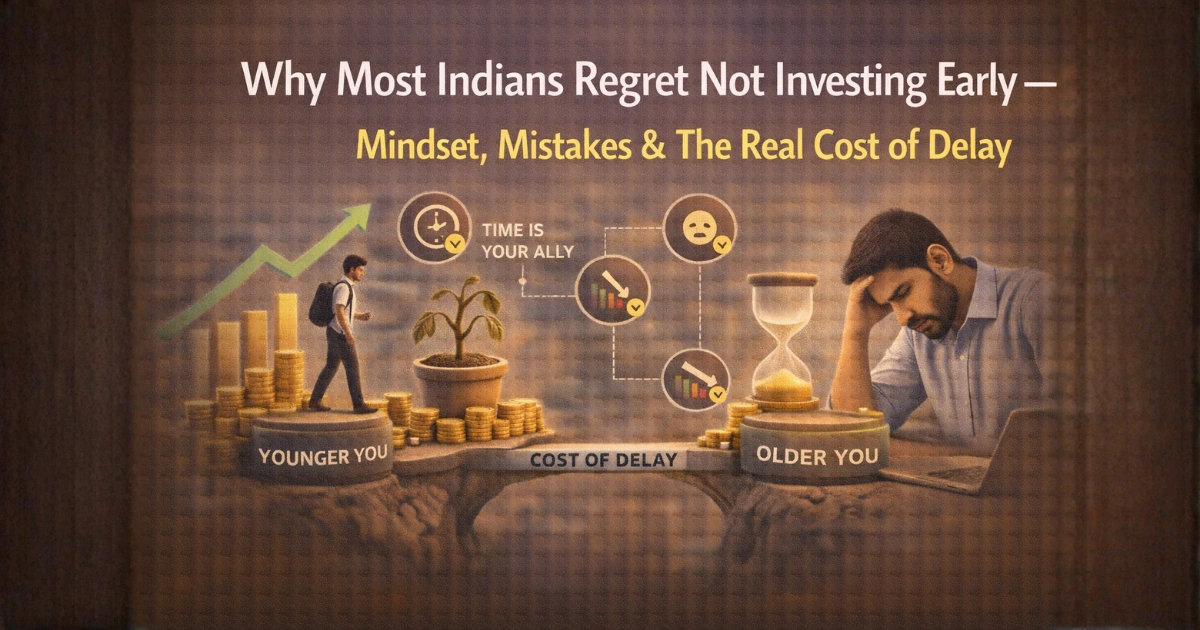
Ask almost any Indian in their 40s or 50s about money, and you’ll hear a quiet confession:
“I wish I had started investing earlier.”
It isn’t always because they didn’t earn enough. Often, it isn’t even because life was unfair. Instead, the regret appears because they waited — and compounding didn’t.
Money grows with time. However, most Indians give time away.
We save hard, yet we invest late. We choose safety over growth, bank balances over wealth, and hesitation over action. Eventually, the regret hits harder than inflation, market crashes, or bad decisions.
This isn’t a lecture about discipline or hustle. Rather, it’s an honest look at why most Indians delay investing, why many quit too soon, and how small mindset shifts can reshape an entire financial future.
The Real Reason Most Indians Invest Too Late
It’s easy to blame lack of money. However, the truth runs deeper than income or opportunity.
In reality, most delays come from mindset, culture, psychology, and environment — not just finances.
Let’s break it down.
Lack of Financial Literacy: We Were Never Taught Money
Growing up, Indians learn how to study, how to work, and how to earn — but not how to build wealth.
Nobody explains:
-
how compounding multiplies money over decades
-
why inflation erodes savings
-
why investing early matters more than investing big
-
how risk reduces with time
Reports on India’s financial-literacy gap repeatedly highlight this reality, including studies from RBI & OECD-INFE:
👉 https://www.oecd.org/financial/education/financial-education-india.htm
So people naturally trust:
-
fixed deposits
-
gold
-
insurance policies
— because those feel “safe.”
Meanwhile, equity and mutual funds seem intimidating not because they are risky, but because no one explained them.
Ultimately, financial literacy isn’t about intelligence — it’s about exposure and awareness.
Fear of Risk and Loss: The Market Feels Like a Gamble
Stories of losses spread faster than stories of long-term wealth. A cousin loses money in a crash. A neighbour panics during a correction. News channels flash red arrows on screen.
As a result, people conclude:
“The stock market is risky — better to stay safe.”
However, not investing is also a risk.
Inflation silently eats savings — a fact emphasised by long-term inflation data from MOSPI & RBI:
👉 https://www.mospi.gov.in/
Real risk isn’t market volatility. Real risk is standing still while prices rise.
Procrastination — “I’ll Start Someday… Just Not Today”
People don’t avoid investing — they postpone it.
“I’ll start when my salary increases.”
art=”3042″ data-end=”3045″ />>“I’ll start next year.”
But years pass, responsibilities grow, and opportunities fade.
This is procrastination disguised as planning.
Time — not money — is the real multiplier. Even small SIPs compound, as explained in AMFI investor-education resources:
👉 https://www.amfiindia.com/investor-corner/investor-education
Unfortunately, regret compounds too.
Present Bias: Choosing Comfort Today Over Security Tomorrow
Humans are wired to prefer immediate rewards over long-term benefits. This behavioural pattern — known as present bias — is widely discussed in behavioural-finance research:
👉 https://www.behaviouraleconomics.com/resources/
New phones feel rewarding. Dining out feels rewarding. Investing, however, feels invisible.
Yet wealth doesn’t reward impulse. It rewards patience, consistency, and delayed gratification.
Herd Mentality — Following the Crowd Instead of a Plan
Money decisions in India are often influenced by:
-
family
-
friends
-
workplace culture
-
WhatsApp advice
If everyone around you avoids markets — you avoid them too.
This is herd mentality, and it is widely documented in investor-behaviour research by Morningstar and CFA Institute:
👉 https://www.cfainstitute.org/en/research/foundation/2021/investor-behavior
Investing isn’t about copying others. Instead, it’s about building a plan that fits your life.
Income & Debt Constraints: When Reality Gets in the Way
Some people genuinely struggle with:
-
rising expenses
-
EMIs
-
education loans
-
family responsibilities
Even then, small investments matter — as echoed in RBI and SEBI financial-planning advisories:
👉 https://www.sebi.gov.in/investors.html
Wealth grows from habits — not leaps.
Perceived Complexity: “Investing Looks Too Complicated”
Charts, graphs, and terminology make investing look technical. However, most successful long-term investors simply:
-
buy quality funds
-
stay invested
-
ignore noise
-
avoid timing the market
These concepts are reinforced in NSE Investor Education resources:
👉 https://www.nseindia.com/invest/investors-education
The biggest mistake isn’t choosing the wrong investment. The biggest mistake is never starting.
Why the Regret Hits Hard Later
The pain doesn’t come from not being rich. Instead, it comes from realising — too late — what compounding could have done.
-
Homes now cost 3x more
-
Retirement corpus feels short
-
Pressure to work longer
-
Stress of catching up
Compounding is generous to those who respect time — and unforgiving to those who don’t.
Common Mistakes Indians Make With Investing
-
Waiting for the “right time” to start
-
Quitting when markets fall
-
Investing without goals
-
Treating saving and investing as the same thing
Savings protect today. Investments protect tomorrow.
Action Steps — How to Start Investing Without Fear
1️⃣ Start small — and start now (even a tiny SIP compounds)
2️⃣ Automate investments to remove emotions
3️⃣ Focus on long-term goals instead of quick returns
4️⃣ Learn basic financial concepts
(risk, diversification, inflation, compounding — explained clearly on Investopedia)
👉 https://www.investopedia.com/investing-4689732
5️⃣ Avoid timing the market — because consistency builds wealth
Pro Tips for a Strong Investor Mindset
-
Treat investments like monthly bills — non-negotiable
-
Increase SIPs when income increases
-
Stop comparing your journey to others
-
Hold through downturns
-
Review once a year — not every week
Wealth grows quietly — and then all at once.
Conclusion — Start Before Regret Begins
Most Indians don’t regret losing money. They regret losing time.
Investing isn’t about becoming rich. Instead, it’s about becoming secure, independent, and future-ready.
Start early. Start small. Above all — start.
Your future self will thank you.