
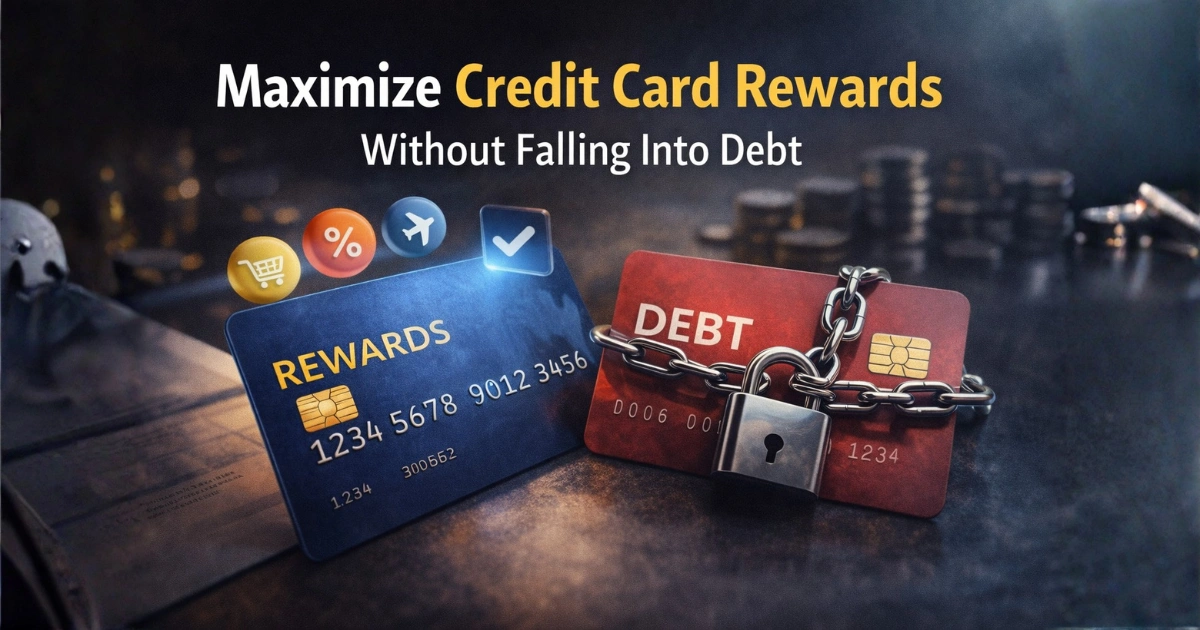
Credit cards have a bad reputation—and honestly, it’s earned.
Most people don’t lose money because rewards don’t work.
They lose money because interest quietly wipes out every benefit.
Cashback disappears.
Points feel meaningless.
Debt piles up.
But here’s the truth most advice skips:
Credit card rewards are incredibly powerful—if you remove debt from the equation.
This guide is about getting the benefits of rewards without falling into debt. No hacks that require overspending. No “just be disciplined” nonsense. Just systems that actually work in real life.
The One Rule That Changes Everything
Before we talk strategy, let’s lock in the rule that makes or breaks everything:
Treat your credit card like a debit card.
That’s it.
If you don’t already have the money in your bank account, you don’t swipe.
This single mindset shift is what separates people who earn thousands in rewards from people who pay thousands in interest.
Credit card rewards only work when:
-
You pay the full statement balance every month
-
You never carry interest
-
You stay in control of spending
Even consumer finance regulators emphasize that interest is the biggest destroyer of card benefits
👉 https://www.consumerfinance.gov/consumer-tools/credit-cards/
Anything else is gambling with expensive money.
Why Credit Card Rewards Fail for Most People
Rewards programs are designed to look generous—but they’re funded by:
-
Interest payments
-
Late fees
-
Overspending
That’s why banks advertise rewards so aggressively. According to Investopedia, interest income remains the primary profit driver for card issuers
👉 https://www.investopedia.com/terms/c/creditcard.asp
When people talk about credit cards being a “trap,” this is what they mean.
The problem isn’t rewards.
The problem is using rewards without a system.
That’s why maximizing rewards, paying on time, and keeping spending in check must happen together. Miss one, and the whole strategy collapses.
Step 1: Review Your Spending Before You Pick a Card
Most people start with the card. That’s backwards.
Before you apply for anything, review your purchases for the last few months or the past year.
Look at:
-
Where your money actually goes
-
Which categories dominate (groceries, dining, travel, fuel)
-
Which expenses are unavoidable
This step alone prevents most bad card choices.
Personal finance experts consistently recommend starting with spending analysis before selecting financial products
👉 https://www.nerdwallet.com/article/credit-cards/how-to-choose-a-credit-card
If you don’t know your spending habits, no rewards strategy will save you.
Step 2: Select the Right Card (Not the Most Popular One)
There’s no “best” credit card. There’s only the right card for your spending.
To select the right card, match rewards to what you already spend on—not what you wish you spent on.
Examples:
-
If dining is your biggest expense, food rewards matter more than travel perks
-
If you rarely fly, airline miles are mostly useless
-
If groceries and fuel dominate, cashback often beats points
This is how you unlock real credit card rewards—without changing your lifestyle.
Using Multiple Cards (Without Losing Control)
One card rarely covers everything well.
Advanced users use two or three cards, each for a specific purpose:
-
One for groceries or fuel
-
One for dining or online shopping
-
One for travel or general spending
This is how people maximize category bonuses without overspending.
The key rule:
More cards only work if your system is simple.
If tracking becomes confusing, rewards aren’t worth the stress.
How to Use a Credit Card for Most Purchases—Safely
Yes, you should use a credit card for most purchases to increase your credit rewards.
But only under strict conditions.
Safe credit card usage looks like this:
-
Daily purchases go on the card
-
Bills are auto-paid in full every month
-
No revolving balances
-
No “I’ll pay it later” thinking
Financial educators consistently recommend autopay of full balances to avoid interest
👉 https://www.investopedia.com/articles/personal-finance/080615/should-you-pay-credit-card-bill-full.asp
When done right, you earn rewards on spending you were already doing—without adding risk.
Sign-Up Bonuses: The Fastest Rewards (If Done Correctly)
Sign-up bonuses are often more valuable than years of regular spending.
But they’re also where people go wrong.
The rule is simple:
Only chase bonuses using expenses you already planned.
Good bonus uses:
-
Insurance premiums
-
Annual subscriptions
-
Travel you were already booking
-
Large planned purchases
Bad bonus uses:
-
Unnecessary shopping
-
Manufactured spending
-
“I’ll figure it out later” expenses
Used correctly, bonuses are one of the easiest ways of maximizing rewards without debt.
Shopping Portals: The Overlooked Multiplier
Most people leave rewards on the table because they skip portals.
Shopping portals let you:
-
Earn card rewards
-
Plus extra cashback or points
-
On the same purchase
This works especially well for:
-
Online shopping
-
Travel bookings
-
Big-ticket items
Here’s how portals work in practice
👉 https://www.investopedia.com/shopping-portals-5213124
It’s a small habit change with outsized impact.
The Non-Negotiables That Protect You From Debt
If you remember nothing else, remember these:
-
Always pay the full statement balance
-
Never carry interest for rewards
-
Automate payments to avoid late fees
-
Track spending weekly, not daily
This is how you enjoy the benefits of rewards without falling into debt.
Common Mistakes That Kill Rewards Value
Even smart people slip here.
Avoid these traps:
-
Paying interest “just once”
-
Chasing rewards outside your spending habits
-
Missing payment dates
-
Opening too many cards too fast
-
Ignoring annual fees vs actual benefits
Rewards are math.
Emotion ruins the math.
A Simple Rewards System You Can Actually Maintain
If you want a clean setup:
-
One primary card for daily spending
-
One category card for top expense
-
Auto-pay statement balance
-
Quarterly review of spending and rewards
That’s it.
No obsession.
No complexity.
Final Thoughts: Rewards Are a Tool, Not a Lifestyle
Credit card rewards are not free money.
They’re a rebate on disciplined behavior.
When you:
-
Select the right card
-
Match rewards to real spending
-
Pay on time
-
Keep spending in check
You win.
When you chase rewards emotionally, the bank wins.
Build a system.
Let rewards follow.