Introduction: The Startup Story Has Quietly Changed
For years, startup investing in India followed a familiar script.
Big funding rounds.
Aggressive growth.
Losses justified as “scale.”
That script is breaking.
India’s financial landscape in 2025 is characterized by dynamic growth, but also by sharper scrutiny. Capital is still flowing—but it’s flowing with conditions. Profitability matters again. Governance matters again. And blind optimism has been replaced with cautious confidence, as highlighted in recent outlooks by the
👉 Reserve Bank of India (RBI) and
👉 Economic Survey of India.
For retail investors watching from the sidelines—or entering through mutual funds, alternative investments, and platforms like Groww (groww.in)—this shift isn’t bad news.
It’s an opportunity.
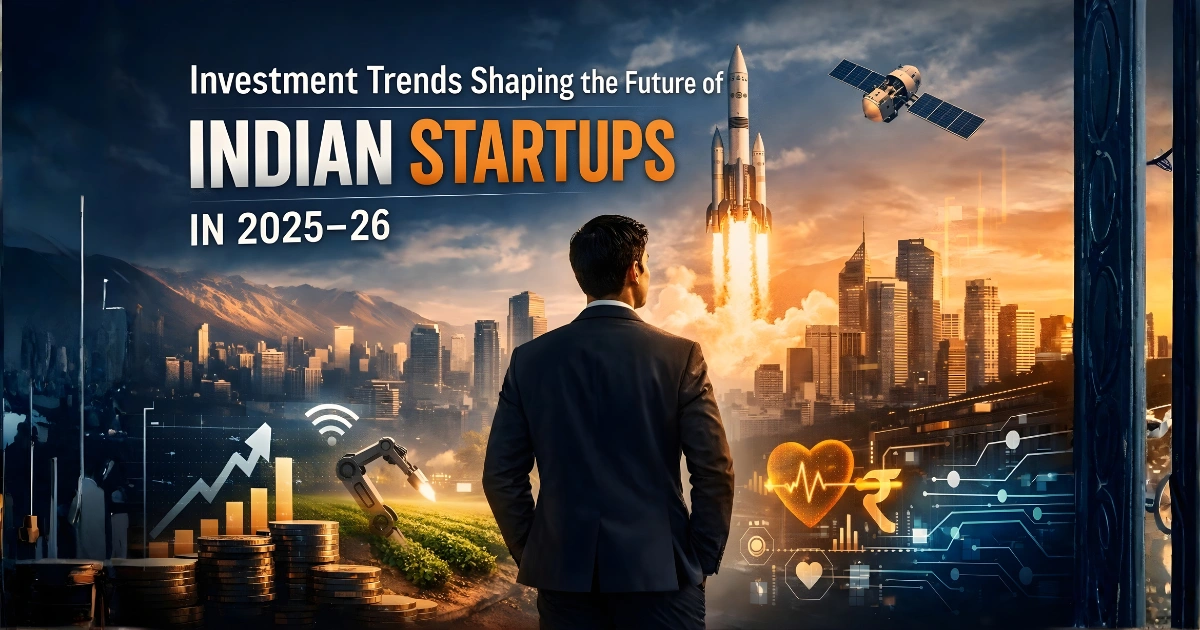
This article breaks down the investment trends shaping the future of India’s startup ecosystem, what’s actually changing behind the scenes, and how everyday investors can participate without falling into speculative traps.
The Big Shift: From Growth-at-All-Costs to Sustainable Businesses
Why the Old Startup Playbook Is Fading
Between 2016 and 2021, startups were rewarded for one thing: growth.
Revenue could wait.
Profits could wait.
Cash burn was celebrated as ambition.
That mindset is no longer dominant.
Today, ESG focus and shifting VC trends are influencing the next chapter of Indian startups in a very real way. Institutional investors, family offices, and global funds—tracked by firms like
👉 Bain & Company – India Venture Capital Reports
are prioritizing resilience over reckless expansion.
What does this mean in practice?
-
Startups are expected to show clear unit economics
-
Profit timelines are shorter and more realistic
-
Governance, audits, and compliance are no longer “later-stage problems”
This doesn’t mean innovation has slowed. It means capital is being allocated more intelligently.
ESG Is No Longer a Buzzword—It’s a Filter
How ESG Focus Is Changing Startup Funding
Environmental, Social, and Governance (ESG) criteria were once discussed mainly in global investing circles. In 2025, they’re deeply embedded in Indian startup investment decisions—especially after regulatory nudges from
👉 SEBI’s ESG and BRSR framework.
Startups aligned with sustainability—clean energy, climate tech, ethical supply chains, inclusive finance—are finding it easier to raise capital even in cautious markets.
Why?
Because ESG-focused businesses:
-
Face lower regulatory risk
-
Attract long-term institutional investors
-
Build consumer trust faster
For retail investors, this means the future of startups in India for 2025 isn’t just about flashy tech—it’s about durable relevance.
Deep Tech Is India’s Quiet Power Move
Trends Driving India’s Deep Tech Ascent
While consumer apps grab headlines, serious money is moving into deep tech.
This includes:
-
Artificial Intelligence (AI)
-
SpaceTech
-
AgriTech
-
Semiconductor-linked innovation
-
Climate and energy technology
Government-backed initiatives like
👉 Startup India and
👉 India Semiconductor Mission
are accelerating this shift.
These are not quick-return sectors. But they solve structural problems.
For example:
-
AI startups optimizing supply chains for Indian manufacturers
-
SpaceTech firms supporting low-cost satellite launches after ISRO’s commercialization push
-
AgriTech platforms improving crop yield and farmer income using data
These trends driving India’s deep tech ascent are reshaping how investors think about value creation—not in quarters, but in decades.
Retail investors don’t invest directly in most deep tech startups yet. But exposure comes indirectly through:
-
Venture-focused mutual funds
-
Fund-of-funds supported by SIDBI
-
Listed companies backing deep tech ventures
FinTech and HealthTech: Still Strong, But More Mature
Why These Sectors Haven’t Lost Their Edge
Despite funding corrections, FinTech and HealthTech remain two of the strongest pillars of startup investment, supported by India’s digital public infrastructure like
👉 UPI and
👉 Ayushman Bharat Digital Mission.
What’s changed is the quality bar.
In FinTech:
-
Lending models are tighter under RBI supervision
-
Compliance is non-negotiable
-
Revenue diversification matters
In HealthTech:
-
Preventive care platforms are gaining traction
-
Digital diagnostics and telemedicine are maturing
-
AI-driven health insights are attracting institutional interest
These sectors align with India’s demographics and policy direction, which is why they continue to draw smart capital—even in cautious times.
Tier 2 and Tier 3 Cities: The Next Startup Frontier
Why Capital Is Moving Beyond Metro Cities
Bengaluru, Mumbai, and Delhi aren’t losing relevance—but they’re no longer the only game in town.
Rising costs, better internet penetration, and localized problem-solving have made Tier 2 and Tier 3 cities fertile ground for startups, as highlighted by
👉 DPIIT Startup Ecosystem Reports.
Investors are paying attention because:
-
Operating costs are lower
-
Talent retention is higher
-
Products are built for real India, not just urban elites
This shift is critical to understanding the future of startups in India for 2025—because the next wave of growth won’t look metropolitan. It’ll look regional.
Retail Investors: From Speculation to Discipline
Retail Participation Is Becoming Cyclical, Not Speculative
India’s retail sector is heading into 2026 with renewed investor confidence—but it’s a different kind of confidence.
The meme-stock era taught painful lessons.
Today, retail participation is becoming cyclical, not speculative. Investors are:
-
Tracking market cycles
-
Staggering entry points
-
Avoiding all-in bets
There’s also a growing preference for rule-based investing, reinforced by SEBI’s push toward investor education
👉 SEBI Investor Awareness.
This maturity aligns well with how startup-linked investments actually work: long horizons, volatility, and patience.
Beyond Stocks: New Avenues for Startup Exposure
How Retail Investors Can Engage Smarter
You don’t need to write angel cheques to participate in startup investment trends.
Realistic, regulated options include:
-
Venture-capital-oriented mutual funds
-
Fund-of-funds backed by SIDBI
-
Listed companies with startup portfolios
-
Structured products with startup-linked themes
Angel networks and VC funds are also becoming more transparent—but these should only be explored after understanding liquidity and risk.
Startup investment is no longer a casino—it’s a strategy.
Conclusion: The Opportunity Is Real—If You Stay Grounded
Investment trends shaping the future of India’s startup ecosystem are not about shortcuts.
They’re about clarity.
Startups are becoming stronger, not weaker. Capital is becoming smarter, not scarcer. And retail investors finally have the tools to participate responsibly.
If you approach startup investment with patience, structure, and realistic expectations, 2025–26 could mark the most rewarding phase yet—not because of hype, but because of fundamentals.