
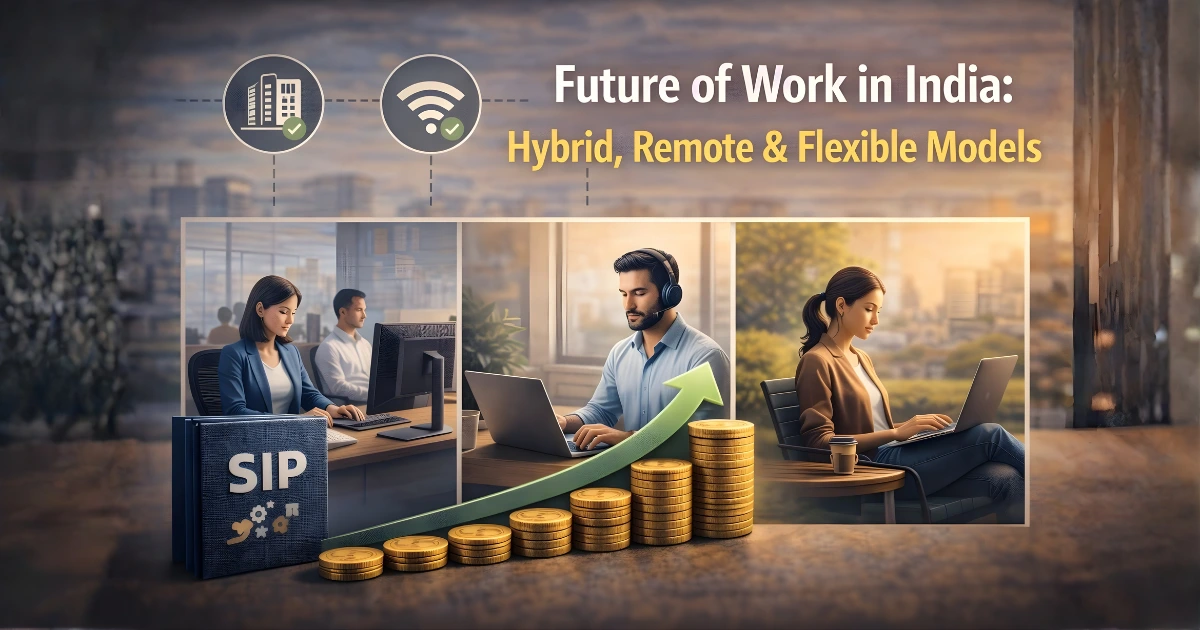
The future of work in India is no longer a distant concept—it is unfolding right now across offices, homes, and co-working spaces nationwide. What began as a pandemic-driven necessity has evolved into a long-term transformation shaped by employee expectations, business realities, and rapid digital adoption.
India’s future of work is being defined by hybrid models, gig roles, and remote job opportunities. While full-time remote work may not dominate every sector, most experts agree that hybrid and flexible work arrangements are here to stay.
From Office-Centric to Flexible: How Work Has Changed
Looking at the past, present, and future of remote work in India, one trend is clear: rigid office-only models are losing relevance.
Remote work surged during the pandemic and peaked across industries. As offices reopened, many organizations opted for hybrid structures instead of returning to five-day office schedules.
According to hiring trends published by NASSCOM, nearly 20% of job postings in India now offer remote or hybrid options, highlighting a structural shift in how companies hire and operate.
👉 https://nasscom.in
Why Hybrid Work Is Winning in India
Hybrid work strikes a practical balance between flexibility and collaboration.
For Employees, It Delivers:
-
Better work-life balance
-
Reduced commute time and costs
-
Greater control over work schedules
For Employers, It Offers:
-
Access to a wider, location-agnostic talent pool
-
Lower real estate and infrastructure costs
-
Higher productivity in focused, knowledge-based roles
Industry projections suggest that 60–70% of IT and IT-enabled services firms will operate on hybrid models by 2025, a trend frequently highlighted in workforce reports by Ministry of Electronics and Information Technology.
👉 https://www.meity.gov.in
Remote Work Is the New Normal—But Not for Everyone
Research indicates that 75% of organizations expect at least 30% of their workforce to remain remote in the coming years.
However, India’s future of work is not one-size-fits-all.
Roles best suited for remote or hybrid work include:
-
Software development
-
Data science and analytics
-
Digital marketing
-
Product design and UX
In contrast, sectors such as manufacturing, healthcare, logistics, and regulated services still require a strong on-site presence, as noted in employment studies by the International Labour Organization.
👉 https://www.ilo.org
Types of Hybrid Work Models Emerging in India
The hybrid workplace combines remote and on-site work, giving employees flexibility over where and when they work.
Common Hybrid Models Include:
Flexible Hybrid Work
Employees choose when to work remotely or from the office.
Fixed Hybrid Work
Organizations mandate specific office days for teams.
Remote-First with Office Hubs
Offices function primarily as collaboration and culture hubs rather than daily workstations.
The future of hybrid work is outcome-driven, human-centered, and adaptive, focusing on productivity rather than physical attendance.
Redesigning Offices as Collaboration Hubs
As hybrid work expands, offices are being reimagined.
Instead of rows of desks, companies are investing in:
-
Collaboration zones
-
Brainstorming and innovation spaces
-
Training and culture-building areas
Technology investments—video conferencing, cloud collaboration tools, and cybersecurity—ensure seamless coordination between remote and in-office teams. These trends align with digital workplace guidelines promoted by the National Informatics Centre.
👉 https://www.nic.in
Legal and Policy Gaps in India’s Hybrid Work Framework
While adoption is accelerating, regulatory frameworks are still evolving.
Provisions under Flexible Work Arrangements and Work From Home guidelines issued by the Ministry of Labour and Employment provide a base, but many grey areas remain.
👉 https://labour.gov.in
Key Challenges Include:
-
Regulation of working hours
-
Data security and employee privacy
-
Occupational health and safety for remote employees
Until comprehensive regulations emerge, organizations must rely on robust internal policies to manage compliance and risk.
How Employers Can Prepare for the Future of Work
To succeed in a hybrid-first future, organizations must move beyond ad-hoc flexibility.
Key Actions for Employers:
Develop a Comprehensive Hybrid Policy
Clearly define eligibility, expectations, and performance metrics.
Introduce Flexible Benefits
Remote work stipends, ergonomic support, and mental health programs improve engagement.
Invest in Collaboration Tools
Secure communication, project management, and cloud platforms are essential.
Train Managers for Hybrid Leadership
Leading distributed teams requires trust, empathy, and outcome-based management.
The future of hybrid work in India depends as much on leadership mindset as on technology.
The Resurgence of Flexible Work Amid Economic Shifts
Interestingly, periods of economic uncertainty have accelerated the return of flexible work models.
Remote and hybrid structures help organizations:
-
Reduce fixed operational costs
-
Retain skilled talent
-
Adapt quickly to market changes
This resilience makes flexibility a strategic business advantage, not merely an employee benefit.
Final Thoughts: A Flexible Future Built on Trust
The remote and hybrid work trend is not a passing phase—it represents a fundamental shift in how work is structured and valued in India.
The future of work in India will be flexible, hybrid, and employee-centric, without compromising productivity or business outcomes. Organizations that invest early in policy, technology, and culture will be best positioned to thrive in this evolving world of work.