
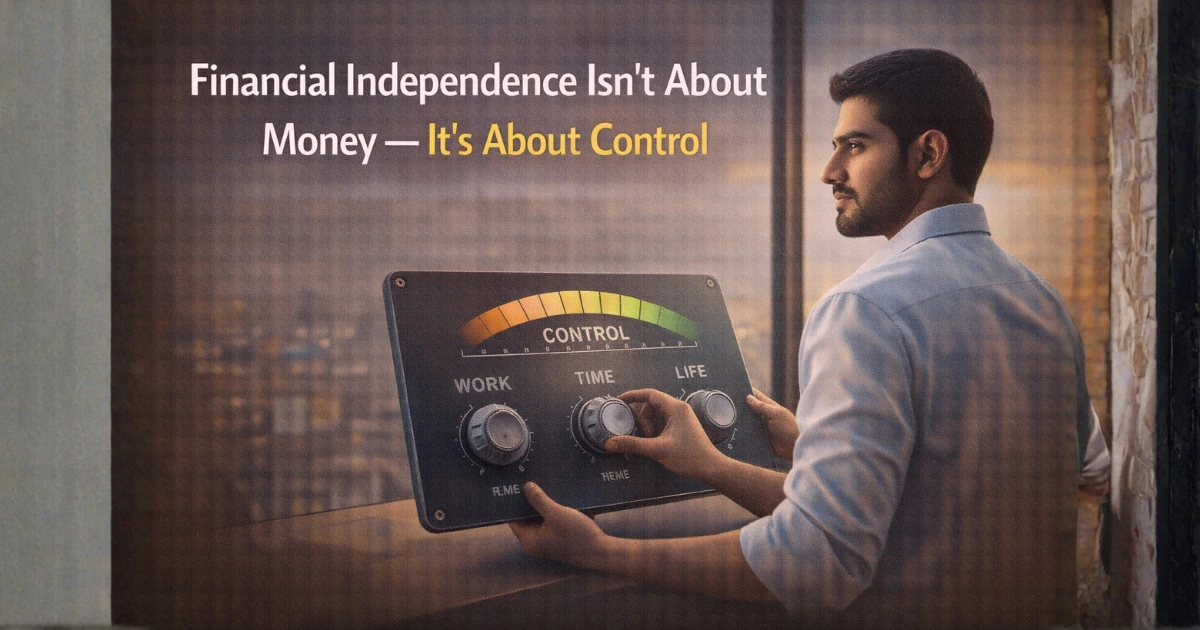
Most people think financial independence is about having more money — a bigger salary, a larger bank balance, or a luxury lifestyle that signals success.
But real independence has very little to do with how much you earn.
True financial independence is about control — control over your time, your choices, your work, your lifestyle, and the direction of your life. It’s the difference between living reactively and living deliberately.
Money is simply the tool that gives you that control.
When you have enough income, savings, and investments to support your life without fear or pressure, you gain something far more valuable than wealth:
Freedom of choice.
Time on your own terms.
Peace of mind and security.
A sense of empowerment over your future.
If you’d like a deeper framework, this guide from The Financial Independence movement explains the philosophy well:
👉 https://www.investopedia.com/terms/f/financial-independence-retire-early-fire.asp
Let’s explore what that really means — and what it takes to build it.
Financial Independence Isn’t About How Much You Earn
We’ve been conditioned to believe income equals security. Earn more, spend more, upgrade life — and you’re “doing well.”
But financial independence isn’t about how much you earn. Two people can earn the same salary and live completely different lives — one constantly stressed, the other calm and in control.
The real difference lies in how you use money, not how much you make.
This aligns with research on financial behaviour and well-being published by the OECD Financial Literacy Programme:
👉 https://www.oecd.org/finance/financial-education/
Financial independence thrives on a strong financial mindset — one built on intention, discipline, and clarity about what truly matters.
It’s about creating freedom of choice, having enough income, savings, and investments to make life decisions without being controlled by bills, debt, or financial pressure.
When money stops dictating your choices, you finally gain space to design the life you want.
What Financial Independence Really Gives You
Freedom of Choice
Freedom of Choice means you’re no longer forced into decisions purely for survival.
You can:
Change jobs without fear
Say no to toxic environments
Take a break when life demands it
Choose meaningful work over constant stress
Spend time on things that align with your values
Money doesn’t buy happiness — but it gives you room to pursue it. The American Psychological Association highlights how financial security directly impacts emotional well-being:
👉 https://www.apa.org/news/press/releases/stress/2019/stress-money
Time on Your Own Terms
Most people spend their lives trading time for money. Financial independence flips that equation.
Time on Your Own Terms means:
You’re not trapped by overtime and burnout
You choose when to work, how much to work, and why you work
You get back hours that once disappeared into deadlines and exhaustion
Time, not money, is the real measure of wealth — a principle often emphasized in personal finance and life-design philosophy:
👉 https://www.goodreads.com/book/show/4099.Your_Money_or_Your_Life
Peace of Mind and Security
One of the most underrated benefits of financial stability is quiet confidence.
Peace of Mind and Security comes from:
Knowing an emergency won’t destroy your finances
Having a safety net instead of living paycheck to paycheck
Feeling prepared rather than anxious about the future
If you’re building your safety net, this emergency-fund guide is useful:
👉 https://www.nerdwallet.com/article/banking/emergency-fund
Security isn’t built on luck — it’s built on intentional habits.
Empowerment
Empowerment is the emotional core of financial independence.
It’s the feeling that:
You’re in charge of your life
Your future isn’t determined by debt or fear
You’re building something meaningful — not just surviving
Money becomes a tool, not a master.
And that shift changes everything.
How to Gain Control — The Practical Path to Financial Independence
Financial independence isn’t a dramatic leap. It’s a gradual transition built through consistent decisions.
Here’s where the change really begins.
Budgeting and Tracking
You can’t control what you don’t understand.
Budgeting and Tracking isn’t about restriction — it’s about awareness.
Track:
Where your money goes
What habits drain your finances
Which expenses matter — and which don’t
A simple budgeting guide to get started:
👉 https://www.investopedia.com/articles/pf/12/budgeting-basics.asp
Clarity creates control. Guessing creates stress.
Living Below Your Means
Financial freedom often starts with one simple principle:
Spend less than you earn — consistently.
Living Below Your Means doesn’t mean depriving yourself. It means:
Choosing value over impulse
Avoiding lifestyle creep
Prioritizing long-term stability over short-term image
Why lifestyle creep silently sabotages savings:
👉 https://www.investopedia.com/terms/l/lifestyle-inflation.asp
People who chase status stay trapped. People who pursue stability build independence.
Managing Debt
Debt limits choice — and choice is the foundation of independence.
Managing Debt means:
Reducing high-interest balances
Avoiding unnecessary borrowing
Using credit as a tool, not a lifeline
A practical debt-repayment overview:
👉 https://www.consumerfinance.gov/consumer-tools/debt-collection/strategies-for-paying-off-debt/
Every rupee freed from debt becomes fuel for your future.
Investing Wisely
Savings protect you. Investments free you.
Investing Wisely allows your money to work alongside you, not against you.
Even small, consistent investments compound into greater control over time — a concept explained well here:
👉 https://www.morningstar.com/articles/1045482/the-power-of-compounding
The goal isn’t greed — it’s security, flexibility, and opportunity.
Protecting Your Assets
Financial independence isn’t just about building wealth — it’s about protecting it.
Protecting Your Assets includes:
Emergency funds
Insurance and risk coverage
Legal and financial backups
A helpful primer on why protection planning matters:
👉 https://www.policybazaar.com/life-insurance/term-insurance/articles/importance-of-financial-protection/
When life throws surprises, protection keeps your progress intact.
Common Mistakes That Block Financial Independence
Many people chase income instead of independence — and end up feeling stuck.
Mistakes worth avoiding:
Treating lifestyle upgrades as progress
Believing freedom starts “after you earn more”
Ignoring debt while increasing expenses
Thinking financial planning is optional
Waiting for the “right time” instead of starting small
Control is built through habits — not luck or timing.
Pro Tips for Building a Strong Financial Mindset
A healthy financial life starts in the mind before it shows in the numbers.
Question spending impulses instead of reacting to them
Separate what truly matters from what only looks impressive
Review your finances regularly — not just during crises
Focus on progress, not perfection
Build discipline slowly and sustainably
A deeper look at money mindset and behaviour:
👉 https://www.morganhousel.com/psychology-of-money
Financial independence thrives on a strong financial mindset — one grounded in patience, self-awareness, and purposeful choices.
Real-Life Example — Control vs. Income
Two people earn the same salary.
One lives at the edge of their income — EMI, lifestyle purchases, social pressure, zero savings.
The other:
Tracks spending
Lives slightly below their means
Pays down debt
Invests consistently
Five years later, both have earned the same — but only one has freedom of choice.
Independence isn’t about income level.
It’s about control over how your income shapes your life.
Conclusion — Financial Independence Is About Control, Not Cash
Financial independence isn’t about chasing money for its own sake. It’s about creating a life where money supports your values instead of controlling your decisions.
It’s about:
Freedom of Choice
Time on Your Own Terms
Peace of Mind and Security
Empowerment
The journey starts with small, practical actions — Budgeting and Tracking, Living Below Your Means, Managing Debt, Investing Wisely, and Protecting Your Assets.
You don’t need to be rich to take control.
You just need to start acting with intention.
Take the first step today. Gain clarity, build discipline, and move toward a life where your decisions are guided by purpose — not financial pressure.