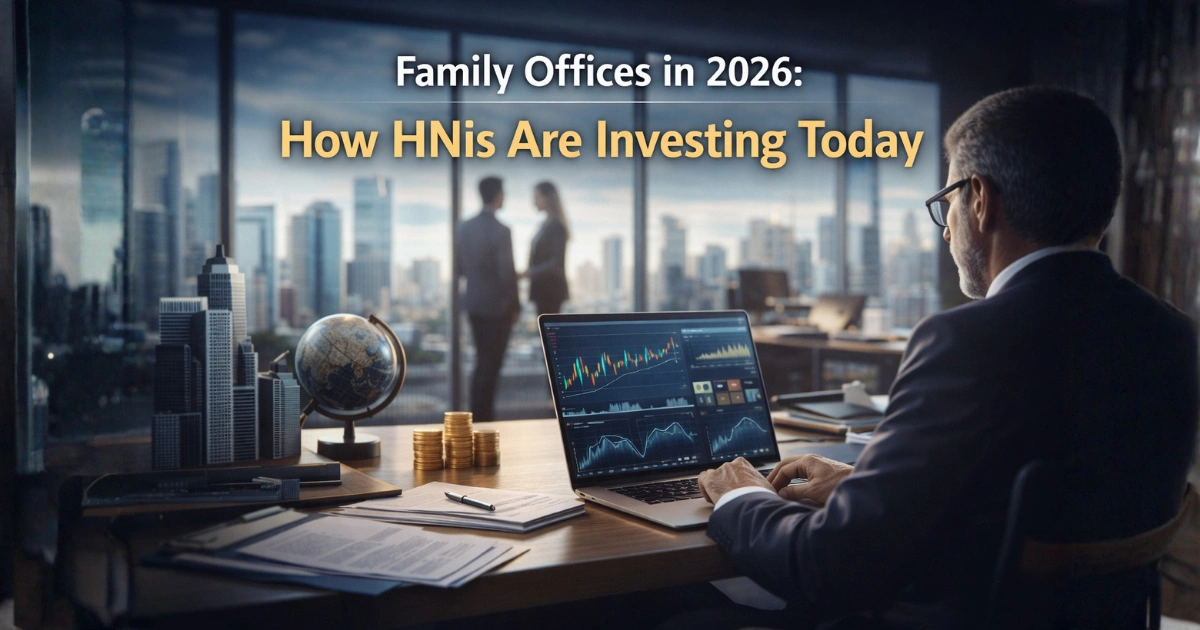
Family Offices: How HNIs Invest in 2026 (And Why It Looks Nothing Like the Past)
Most people assume wealthy families invest the same way they always have.
Stocks.
Some real estate.
A few safe bets.
That picture is outdated.
In 2026, the family office landscape has shifted sharply. High-Net-Worth Individuals (HNIs) are no longer chasing short-term performance or headline returns. They’re building institutional-grade portfolios designed to survive volatility, compound quietly, and last generations.
The change isn’t loud. But it’s decisive.
Family offices today look less like personal wealth managers—and more like disciplined investment firms with long time horizons, diversified asset allocation, and clear intent. This evolution mirrors global trends highlighted by research firms tracking family office behavior worldwide
→ https://www.ubs.com/global/en/family-office.html
The Family Office Landscape in 2026: What’s Fundamentally Changed
The last few years reshaped how wealth behaves.
Markets became more volatile.
Interest rates normalized.
Private assets matured.
Geopolitical risk stopped being theoretical.
According to global asset-allocation surveys by UBS and Campden Wealth, these forces have materially changed how family offices think about risk
→ https://www.campdenfb.com
As a result, the family office landscape in 2026 is defined by one core idea: control risk without giving up growth.
HNIs want exposure to upside—but not at the cost of capital erosion.
That mindset is driving a more structured, professional approach to investing.
How Family Offices Are Structuring Portfolios in 2026
Modern family office portfolios look intentionally balanced, not opportunistic.
A common allocation framework emerging across global family offices looks like this:
-
~35% Public Markets
Listed equities, ETFs, and selective fixed income for liquidity and transparency. -
~25% Alternatives
Private equity, private credit, and structured opportunities offering higher return potential with longer lock-ins. -
~20% Real Estate
Income-generating assets, logistics, commercial properties, and selective residential exposure. -
Remaining Allocation
Cash buffers, opportunistic investments, and strategic direct bets.
This structure closely aligns with asset-allocation insights shared by Preqin and institutional advisory firms
→ https://www.preqin.com/insights
This isn’t accidental. It reflects how HNIs think about stability, optionality, and long-term compounding.
Why Public Markets Still Matter—But Less Than Before
Public equities remain important, but they’re no longer the star of the show.
Family offices use public markets for:
-
Liquidity
-
Tactical rebalancing
-
Global exposure
-
Risk hedging
What’s changed is position sizing. Instead of overexposure, public markets are treated as one component of a broader strategy, not the strategy itself—an approach increasingly recommended by institutional wealth advisors
→ https://www.blackrock.com/institutions/en
Alternatives: Where Family Offices Are Leaning In
The real shift is in alternatives.
In 2026, family offices are increasingly investing in startups, ESG initiatives, and global assets through private channels.
Why?
Because alternatives offer:
-
Return asymmetry
-
Lower correlation to public markets
-
Control over deal structure
-
Longer-term value creation
Private credit, in particular, has gained traction as interest-rate cycles normalized—something highlighted in market outlooks by McKinsey & Company
→ https://www.mckinsey.com/industries/private-capital
Direct Startup Investing Is No Longer Experimental
A decade ago, startups were “optional.”
In 2026, they’re strategic.
Many family offices now allocate a defined portion of capital to:
-
Early- and growth-stage startups
-
Sector-focused venture themes
-
Co-investments alongside funds
This shift reflects broader trends in patient capital and direct investing discussed by Harvard Business Review
→ https://hbr.org
The motivation isn’t hype. It’s exposure to innovation, access to outsized upside, and participation in long-term business creation.
This is where patient capital shines.
ESG and Impact: From Marketing to Mandate
ESG used to be optional—or cosmetic.
That’s no longer the case.
Family offices today integrate ESG initiatives directly into their investment strategies, not as exclusions, but as filters for quality and sustainability.
Why the shift?
Because:
-
Regulatory pressure is increasing
-
Younger family members demand alignment
-
Sustainable businesses are proving resilient
-
Long-term risks are easier to manage
Global studies from World Economic Forum consistently show ESG-aligned portfolios improving long-term resilience
→ https://www.weforum.org
Impact investing isn’t about sacrificing returns. It’s about avoiding hidden risks.
Real Estate: Still Core, But Smarter
Real estate remains a cornerstone—but with sharper focus.
Family offices are prioritizing:
-
Yield visibility
-
Asset quality over scale
-
Commercial and logistics assets
-
Selective global exposure
Market data from Knight Frank and CBRE shows institutional capital shifting toward income stability over speculative appreciation
→ https://www.knightfrank.com
→ https://www.cbre.com
In 2026, real estate decisions look more like balance-sheet management than emotional bets.
Investment Strategies Are Becoming More Institutional
One quiet trend defines everything else: professionalism.
Family office investment strategies now resemble those of endowments and sovereign funds.
This includes:
-
Formal asset-allocation frameworks
-
Risk committees
-
External advisors and CIO models
-
Periodic portfolio stress-testing
Wealth is no longer managed informally. It’s governed—a trend reinforced by institutional best practices outlined by CFA Institute
→ https://www.cfainstitute.org
Practical Action Steps for HNIs and Family Offices
If you’re thinking like a family office—or planning to build one—start here:
-
Define a long-term objective, not just return targets
-
Separate liquidity needs from growth capital
-
Allocate deliberately across asset classes
-
Build expertise before chasing alternatives
-
Review portfolio risk, not just performance
Good decisions compound. Bad structures don’t.
Common Mistakes Family Offices Still Make
Even sophisticated investors stumble.
Watch out for:
-
Over-concentration in familiar assets
-
Chasing trends without understanding cycles
-
Ignoring governance and reporting discipline
-
Treating startups like public stocks
-
Underestimating liquidity constraints
Complex portfolios demand clarity, not confidence alone.
Pro Tips from Experienced Family Office Advisors
Insights echoed across global family-office roundtables
→ https://www.familyofficeexchange.com
-
Think in decades, not quarters
-
Protect capital before chasing growth
-
Build teams, not dependency on one advisor
-
Document investment philosophy clearly
-
Align strategy with family values early
The strongest family offices aren’t the most aggressive—they’re the most consistent.
Final Thoughts: The Quiet Evolution of Wealth in 2026
In 2026, family offices aren’t trying to beat the market.
They’re trying to outlast it.
The modern family office blends discipline with flexibility, tradition with innovation, and caution with conviction.
If you’re an HNI thinking about long-term wealth, the lesson is clear:
Wealth today isn’t built by reacting faster.
It’s built by structuring smarter.