
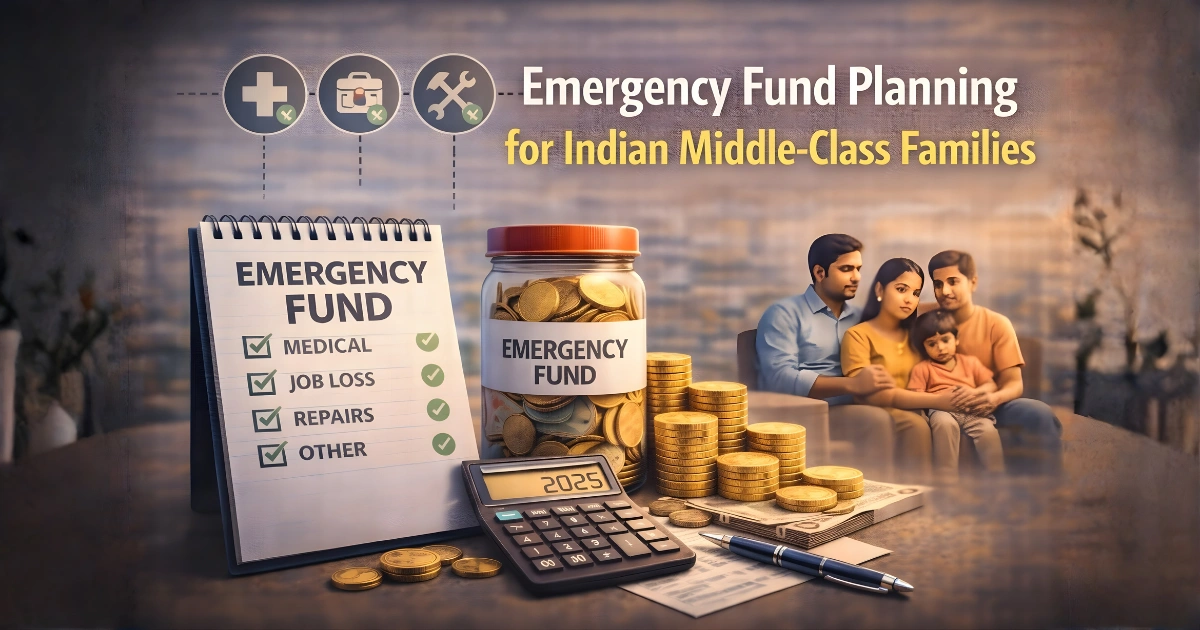
Life is unpredictable, especially for middle-class families managing fixed incomes and rising costs. A medical emergency, job loss, or urgent home repair can disrupt finances overnight. That’s why emergency fund planning for Indian middle-class families is not optional—it’s essential.
An emergency fund is a dedicated reserve of money set aside to cover unexpected and urgent expenses. This guide explains how much you really need, where to keep the money, and how to build it without stress. With careful planning and the right strategies, saving for emergencies is entirely achievable.
What Is an Emergency Fund and Why Every Indian Family Needs One
An emergency fund acts as a financial safety net. It helps you handle sudden expenses without borrowing, selling investments, or derailing long-term goals.
Indian families benefit from an emergency fund because it:
-
Prevents dependence on high-interest personal loans
-
Protects long-term investments like mutual funds and retirement savings
-
Reduces financial stress during uncertain situations
Whether it’s a health emergency or temporary income loss, this fund gives you breathing room when it matters most.
How Much Emergency Fund Do You Really Need?
The Common Recommendation: 3–6 Months of Expenses
A widely accepted rule is to keep 3–6 months of essential living expenses as an emergency fund.
Essential expenses usually include:
-
Rent or home loan EMI
-
Groceries and utilities
-
School fees
-
Insurance premiums
-
Transportation
For families with a single income or unstable employment, it’s safer to target 6–12 months of expenses.
Why Thumb Rules Don’t Always Work
Generic advice like “save six months of expenses” is helpful—but not universal.
Your ideal emergency fund depends on:
-
Number of earning members
-
Job stability and industry risk
-
Existing health and life insurance
-
Family size and dependents
Using a calculator such as the HDFC Life emergency fund calculator helps estimate a more accurate target based on real household costs:
👉 https://www.hdfclife.com/financial-tools-calculators/emergency-fund-calculator
Where Should You Keep Your Emergency Fund?
A good emergency fund in India should be safe, liquid, and easily accessible. Returns are secondary.
Best Options for Emergency Fund Storage
Savings account
-
Instant access
-
Zero risk
-
Lower returns
Liquid mutual funds
-
Better returns than savings accounts
-
Withdrawals usually within 24 hours
-
Regulated by Securities and Exchange Board of India (SEBI)
👉 https://www.sebi.gov.in
Investor education on liquid funds is available via Association of Mutual Funds in India (AMFI):
👉 https://www.amfiindia.com/investor-corner/knowledge-center/liquid-funds.html
Short-term fixed deposits
-
Capital protection
-
Slightly higher interest
-
Can be broken if needed
Avoid locking your entire emergency fund in instruments with long lock-in periods or penalties.
What About PPF?
The Public Provident Fund (PPF) is excellent for long-term financial planning and tax efficiency. Official details are available via the National Savings Institute:
👉 https://www.nsiindia.gov.in/InternalPage.aspx?Id_Pk=55
However, PPF is not ideal for emergencies due to limited liquidity in the early years.
PPF works best as:
-
A long-term backup layer
-
A supplement—not a replacement—for your emergency fund
Step-by-Step: How to Build an Emergency Fund from Scratch
Step 1: Calculate Your Monthly Essentials
List all non-negotiable expenses and multiply by 3, 6, or 12 months based on comfort.
Step 2: Start Small, Stay Consistent
You don’t need the full amount immediately.
-
Start with one month’s expenses
-
Automate monthly transfers
-
Increase contributions as income grows
Step 3: Keep the Fund Separate
Use a dedicated savings account or liquid fund to avoid accidental spending.
Step 4: Review Annually
Reassess your fund when:
-
Income changes
-
Family size increases
-
Living costs rise significantly
Don’t Ignore Insurance in Emergency Fund Planning
An emergency fund works best when paired with adequate insurance coverage.
Essential policies include:
-
Health insurance for the entire family
-
Term life insurance for earning members
Insurance reduces the burden on your emergency fund, helping it last longer during crises.
Common Mistakes to Avoid
-
Investing emergency money in volatile assets like equities
-
Using the fund for vacations or shopping
-
Not increasing the fund as expenses rise
-
Relying only on credit cards during emergencies
Discipline ensures the fund is available when you actually need it.
Final Thoughts: Financial Security Starts with Preparedness
Emergency fund planning for Indian middle-class families is about control, not fear. By setting a realistic target, choosing safe and liquid options, and supporting the fund with insurance, you create a strong financial foundation.
Emergencies are unpredictable—but your response doesn’t have to be. Start building your emergency fund today, one step at a time, and protect your family’s financial peace.