Most people don’t overspend on weddings because they’re careless.
They overspend because the bills arrive all at once.
Venue deposits.
Catering advances.
Clothes, jewellery, travel, gifts.
Even families that “planned ahead” often end up dipping into emergency savings or taking short-term debt—because the planning was vague, not structured.
That’s where sinking funds change everything.
A sinking fund isn’t a budgeting trick. It’s a calm, predictable system that lets you pay for big, emotional expenses—like weddings—without financial regret.
Why Big Expenses Feel Overwhelming (Even When They’re Planned)
Weddings aren’t surprises. Neither are anniversaries, renovations, or milestone celebrations.
Yet they still create stress because:
-
Costs are spread across months, but payments aren’t
-
People save “in general,” not for a specific goal
-
Money meant for the wedding gets mixed with daily spending
The result? Scrambling at the last minute.
This is a classic example of what behavioral finance calls mental accounting failure, where money without a clear purpose gets misused
👉 https://www.investopedia.com/terms/m/mentalaccounting.asp
Sinking funds solve this by giving every big expense its own job.
What Is a Sinking Fund (In Simple Terms)?
A sinking fund is money set aside regularly for planned future expenses.
Think of it as:
-
A dedicated bucket of money
-
Built slowly, deliberately
-
Used for one specific purpose
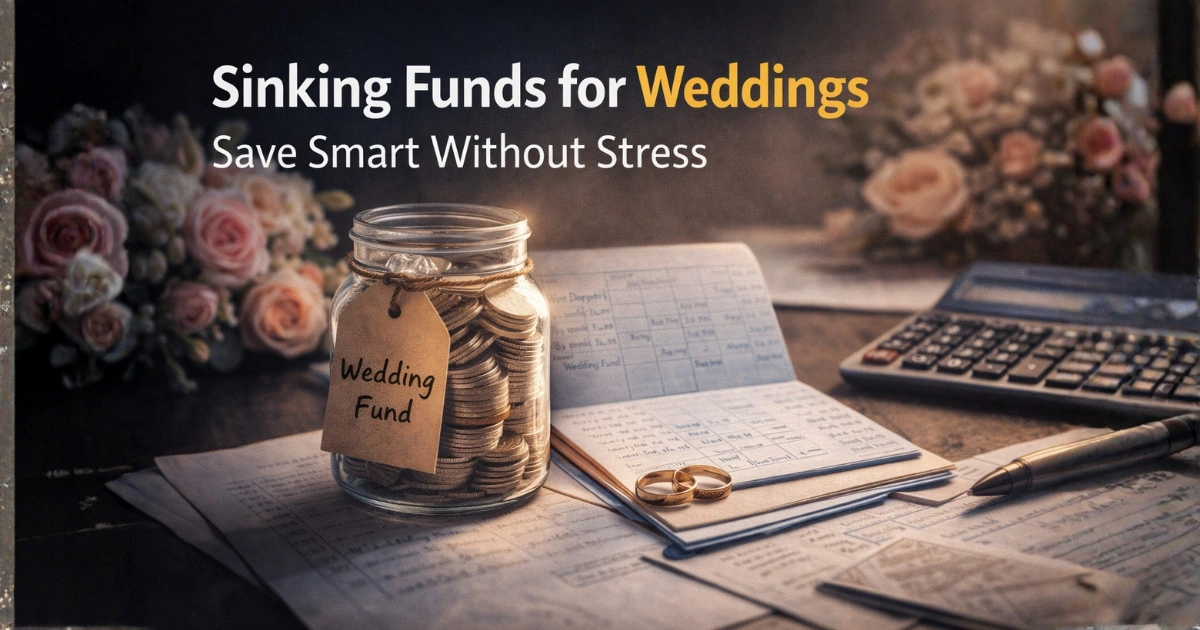
In practice, a sinking fund is a dedicated savings account for a specific, planned expense—like a wedding.
Instead of saving randomly, you:
-
Decide the total cost
-
Decide the timeline
-
Set aside a fixed amount every month
That’s it.
This concept is widely recommended in personal finance fundamentals
👉 https://www.investopedia.com/terms/s/sinkingfund.asp
Why Sinking Funds Work So Well for Weddings
Weddings are emotional. And emotions don’t mix well with money.
Sinking funds bring logic into an emotional situation.
They:
-
Remove guesswork
-
Prevent last-minute borrowing
-
Reduce family pressure
-
Create spending boundaries
Most importantly, sinking funds help you save for significant expenses without touching long-term goals like retirement or investments.
How a Wedding Sinking Fund Actually Works
Let’s make this real.
Say your total wedding budget is ₹15,00,000.
Your timeline is 18 months.
₹15,00,000 ÷ 18 = ₹83,334 per month
That’s your sinking fund contribution.
You’re no longer “saving for a wedding.”
You’re executing a plan.
This is the core idea behind setting aside money for anticipated expenses, large purchases, or major life events—planned cash flow, not reactive borrowing.
Step-by-Step: How to Set Up a Sinking Fund for a Wedding
You don’t need complex tools. You need clarity.
Step 1: Define the Total Target (Be Honest)
Include everything:
-
Venue and catering
-
Clothing and jewellery
-
Photography and décor
-
Travel and accommodation
-
Buffers for unexpected costs
Underestimating here breaks the system later. Budgeting authorities consistently warn against ignoring hidden costs
👉 https://www.nerdwallet.com/article/finance/how-to-make-a-budget
Step 2: Decide the Timeline
Count months—not years.
Be realistic about:
-
Payment schedules
-
Advance deposits
-
Final settlement dates
This determines how aggressive your monthly saving needs to be.
Step 3: Do the Math (No Emotion)
Total cost ÷ months remaining = monthly contribution.
This is where sinking funds shine:
-
They turn big stress into small, manageable actions
-
They make progress visible
Step 4: Create a Separate Account
A sinking fund should never sit in your main savings account.
Why?
-
It prevents accidental spending
-
It creates mental separation
-
It builds discipline automatically
Remember, a sinking fund is a dedicated savings account for a specific, planned expense. Treat it that way.
Many banks and financial planners recommend separating goal-based savings
👉 https://www.investopedia.com/articles/personal-finance/082615/should-you-have-multiple-savings-accounts.asp
Step 5: Automate Everything
Manual saving fails.
Automate the transfer:
-
Right after salary credit
-
Before lifestyle spending begins
Automation removes willpower from the equation—one of the strongest predictors of successful saving
👉 https://www.investopedia.com/articles/personal-finance/082015/why-automate-your-savings.asp
Common Mistakes People Make With Wedding Sinking Funds
Even smart planners slip up.
Avoid these:
-
Mixing wedding money with emergency funds
-
Stopping contributions “just this month”
-
Underestimating hidden costs
-
Using sinking fund money for unrelated expenses
Once you break the boundary, the system collapses.
Sinking Funds vs Emergency Funds (Don’t Confuse Them)
This matters.
-
Emergency fund → unexpected, urgent, non-negotiable
-
Sinking fund → expected, planned, emotional
Weddings are not emergencies.
They deserve their own structure.
Using emergency funds for weddings increases financial risk unnecessarily
👉 https://www.investopedia.com/terms/e/emergency_fund.asp
Beyond Weddings: Where Else Sinking Funds Work
Once you use one sinking fund, you’ll never go back.
They work beautifully for:
-
Home renovations
-
Vacations
-
Education expenses
-
Annual insurance premiums
-
Car replacement
Anywhere you’re setting aside money for anticipated expenses, large purchases, a sinking fund brings control.
Pro Tips to Make Sinking Funds Even More Effective
-
Add a small buffer (5–10%) for price inflation
-
Review the fund quarterly, not monthly
-
Increase contributions if income rises
-
Stop contributions once the goal is met—then redirect
Sinking funds are meant to end—not run forever.
The Psychological Benefit No One Talks About
Here’s the underrated part.
When you use sinking funds:
-
Spending feels guilt-free
-
Decisions feel calmer
-
Family conversations become easier
Because the money is already there.
That peace of mind is worth more than any interest you might earn elsewhere.
Final Thoughts: Big Moments Deserve Calm Money
Weddings are meant to be remembered for joy—not financial stress.
Sinking funds don’t reduce celebration.
They protect it.
By setting aside money regularly for planned future expenses, you:
-
Stay out of debt
-
Stay in control
-
Stay aligned with long-term goals
Start early.
Automate the process.
Let the fund do the heavy lifting.
Big moments feel better when money is ready.