
Introduction: 2025 Wasn’t About Big Valuations. It Was About Big Wake-Up Calls.
For years, Indian startup stories followed a predictable script.
Fast growth. Louder headlines. Bigger funding rounds.
In 2025, that script quietly broke.
Some of India’s mega-deals in 2025 didn’t reward speed. They rewarded discipline. The biggest winners weren’t the flashiest startups—but those that survived stress tests others couldn’t.
Reports from platforms like Bain & Company India and BCG India repeatedly highlighted this shift toward fundamentals and operational discipline rather than vanity growth
👉 https://www.bain.com/insights/india-startup-ecosystem
👉 https://www.bcg.com/india/startup-ecosystem
For anyone serious about long-term investing, especially those building wealth steadily rather than chasing quick wins, the Indian startup ecosystem offered unusually clear lessons this year.
This wasn’t a year for hype.
It was a year for fundamentals.
Profitability Over Hype: The Market Finally Drew a Line
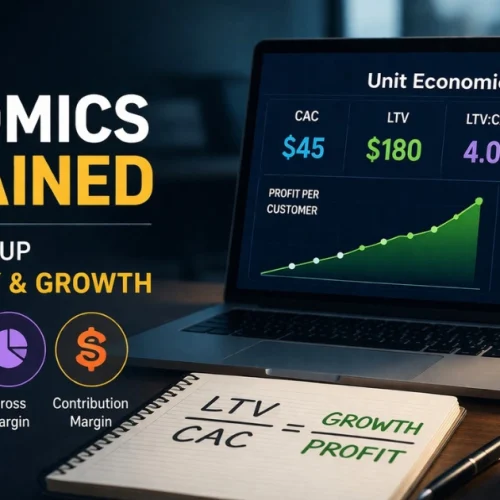
For the first time in years, Profitability Over Hype wasn’t just a slogan—it was a filter.
In 2025, investors became allergic to:
-
Growth funded entirely by debt
-
Discount-led expansion without unit economics
-
“We’ll fix margins later” business plans
According to RBI Financial Stability Reports, excessive leverage and cash burn emerged as key systemic risks in startup-heavy sectors
👉 https://www.rbi.org.in/Scripts/FSR.aspx
Startups that showed clear paths to cash flow—even with slower growth—found capital. Those that didn’t struggled, sometimes publicly.
What This Means for Investors
As a wealth builder, the takeaway is simple:
-
Revenue growth without profits is fragile
-
Sustainable businesses survive funding cycles
-
Profits buy time—and time builds compounding
If a company can’t explain how it makes money today, don’t assume it magically will tomorrow.
Strong Governance Is Non-Negotiable Now
Another loud lesson from the Indian startup space in 2025 was this:
Strong Governance is Non-Negotiable.
Board independence, audit discipline, and disclosure standards stopped being “later-stage concerns.” They became deal breakers.
Guidelines from SEBI and tightening compliance norms made governance gaps harder to hide
👉 https://www.sebi.gov.in/legal/regulations
Several large deals were delayed or repriced—not because of weak demand, but because governance issues surfaced during due diligence.
Real-World Signal to Watch
Long-term wealth builders should look beyond products and growth charts:
-
Are financials transparent?
-
Is decision-making concentrated or accountable?
-
Are minority shareholders protected?
Strong governance doesn’t trend on social media.
But weak governance quietly destroys wealth.
Domestic Resilience Beat Global Storytelling
One of the most underrated insights from India’s mega-deals in 2025 was the importance of Domestic Resilience.
Startups overly dependent on:
-
Cross-border capital flows
-
Global consumer sentiment
-
Regulatory arbitrage
faced volatility as global liquidity tightened.
Meanwhile, companies deeply rooted in Indian demand—payments, savings, credit access, logistics, healthcare—proved far more stable. This trend is echoed in McKinsey India’s growth outlook reports
👉 https://www.mckinsey.com/featured-insights/india
Why This Matters for Long-Term Investing
India’s growth story is real—but uneven globally.
India-first businesses tend to:
-
Face lower currency risk
-
Scale more predictably
-
Compound steadily over time
This is especially relevant when evaluating Indian wealthtech startups focused on long-term savers rather than speculative trading behavior.
Focus on Real Value Creation, Not Vanity Metrics
Another quiet shift in 2025: vanity metrics lost their charm.
App downloads, GMV, and user counts still mattered—but only when tied to real value creation.
Investor decks increasingly faced questions aligned with frameworks published by Harvard Business Review on sustainable growth
👉 https://hbr.org/topic/strategy
-
Are users paying—or just signing up?
-
Is retention improving?
-
Does the product solve a recurring problem?
A Simple Investor Filter
Before getting excited by growth numbers, ask:
“If funding stopped today, would this business still matter?”
If the answer is no, the valuation deserves skepticism.
The Power of Compounding in Market Leaders
While early-stage hype cooled, market leaders quietly strengthened.
The Power of Compounding in Market Leaders became obvious:
-
Margins improved
-
Brand trust reduced acquisition costs
-
Scale created operating leverage
This mirrors long-term market research from Morningstar on durable competitive advantages
👉 https://www.morningstar.com/investing-classroom
Long-Term Lesson
Wealth isn’t built by constantly rotating bets.
It’s built by staying invested in businesses that keep winning slowly.
Market leaders may look boring in bull markets—but they dominate when cycles turn.
Identifying Emerging Sectors Without Chasing Noise
2025 didn’t kill innovation. It refined it.
Identifying Emerging Sectors became less about buzzwords and more about necessity-driven growth.
Sectors that attracted serious capital:
-
Wealthtech focused on long-term savings
-
MSME lending with strong underwriting
-
Healthcare delivery and diagnostics
-
Infrastructure-linked technology platforms
These align closely with India’s structural priorities outlined by NITI Aayog
👉 https://www.niti.gov.in
The common thread?
Real problems. Large markets. Patient capital.
Common Mistakes Long-Term Investors Still Make
Even in 2025, many investors repeated old errors:
-
Chasing headlines instead of balance sheets
-
Treating valuation drops as automatic opportunity
-
Over-diversifying without conviction
Avoid these if wealth—not excitement—is the goal.
Practical Action Steps for Wealth Builders
If you’re applying these lessons:
-
Track profitability trends, not just revenue
-
Read governance disclosures carefully
-
Favor businesses serving domestic demand
-
Hold quality longer instead of rotating often
Slow decisions. Fewer bets. Better outcomes.
Conclusion: 2025 Didn’t Kill Startup Investing—It Matured It
The biggest lesson from India’s startup ecosystem in 2025 isn’t pessimism. It’s clarity.
The market didn’t stop believing in growth.
It stopped rewarding careless growth.
For long-term wealth builders, this is good news.
When hype fades, fundamentals shine.
When noise drops, compounding speaks.
Build patience alongside capital—and the next decade can reward you quietly and powerfully.