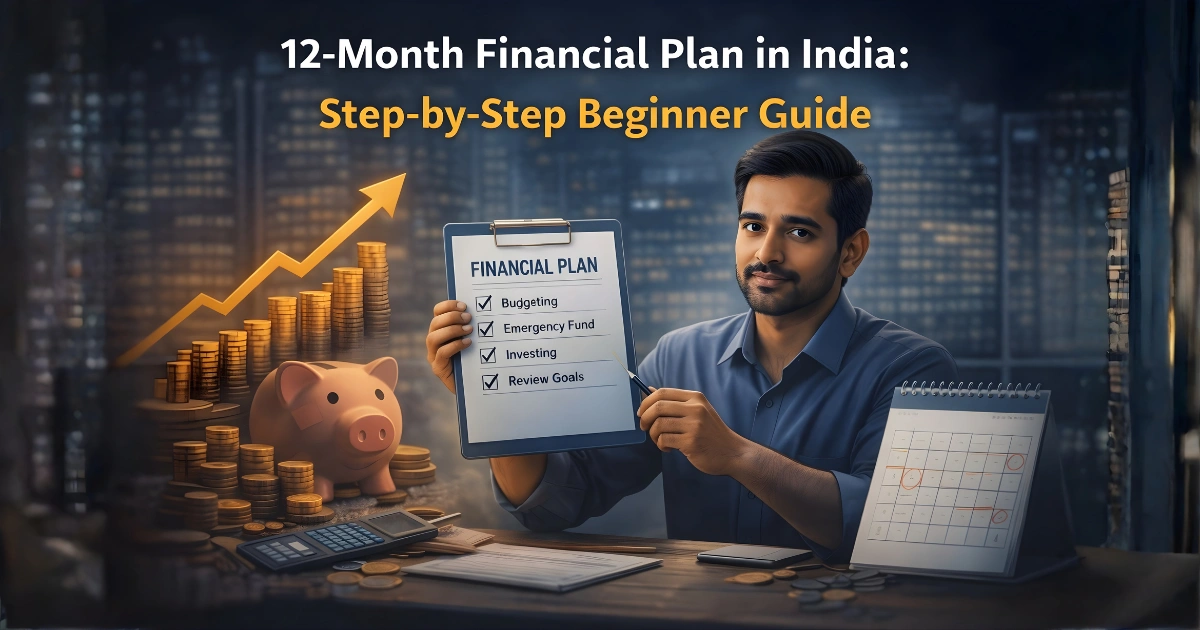
Introduction: Most People Don’t Fail at Money. They Just Never Plan for It.
If someone asked you today, “Where exactly will your money go over the next 12 months?”—could you answer clearly?
Most people can’t.
Not because they’re careless. But because money decisions in India often happen reactively. A bill here. A festival expense there. A sudden EMI. By the end of the year, savings feel accidental instead of intentional.
👉 Context:
Why Indians struggle with financial planning — RBI Financial Literacy Insights
https://rbikehtahai.rbi.org.in
That’s exactly why a 12-month financial plan matters. Not a complex spreadsheet. Not a finance textbook. Just a clear, realistic system that helps you stay in control.
This step-by-step guide to building a personal finance plan is designed for beginners—working professionals, freelancers, couples, or anyone who wants clarity without jargon.
Step 1: Assess Your Current Financial Situation
Before planning the future, you need to face the present—honestly.
Assess your current financial situation by listing:
-
Monthly income (salary, freelance, side income)
-
Fixed expenses (rent, EMIs, insurance)
-
Variable expenses (food, travel, shopping)
-
Existing savings and investments
-
Outstanding debts (credit cards, personal loans)
👉 Why this matters:
https://www.investopedia.com/terms/f/financialplanning.asp
This isn’t about judgment. It’s about awareness.
Real-life example:
You may think you “don’t save much,” but once you track expenses, you realise Swiggy, quick trips, and subscriptions quietly eat ₹8,000–₹10,000 a month.
Clarity is power. Guesswork is expensive.
Step 2: Set Clear Financial Goals (Not Vague Wishes)
“Save more money” isn’t a plan. It’s a hope.
You need to set clear financial goals that are:
-
Specific
-
Time-bound
-
Relevant to your life
Break them into:
-
Short-term (0–12 months): emergency fund, travel, gadgets
-
Medium-term (1–5 years): car, house down payment
-
Long-term (5+ years): retirement, child’s education
👉 Goal-based planning explained:
https://www.investopedia.com/terms/g/goalbasedinvesting.asp
Example:
Instead of “build savings,” say:
“I want ₹1.5 lakh in an emergency fund within 12 months.”
Clear goals give your money direction. Without them, spending wins by default.
Step 3: Create a Realistic Budget You’ll Actually Follow
This is where most plans fail—not because budgets don’t work, but because they’re unrealistic.
To create a realistic budget, start simple:
-
Essentials first
-
Savings second
-
Lifestyle last
A practical thumb rule for beginners:
-
50–55% essentials
-
20–30% savings & investments
-
15–25% lifestyle
👉 Budgeting basics:
https://www.investopedia.com/terms/b/budget.asp
Important truth:
A budget is not about restriction. It’s about permission—with limits.
If your budget doesn’t allow any fun, you won’t stick to it.
Step 4: Build an Emergency Fund Before Anything Else
Build an emergency fund.
Aim for:
-
3–6 months of essential expenses
-
Kept in savings account or liquid fund
-
Easy access, zero risk
👉 Emergency fund guidance (India):
https://rbikehtahai.rbi.org.in
Why this matters:
Without an emergency fund, every surprise becomes debt.
Medical issue? Credit card.
Job gap? Personal loan.
An emergency fund is boring—and incredibly powerful.
Step 5: Manage Debt Wisely (Not Emotionally)
Debt isn’t always bad. Uncontrolled debt is.
To manage debt wisely, prioritise:
-
High-interest debt (credit cards, BNPL, personal loans)
-
Medium-interest loans (education, consumer loans)
-
Low-interest loans (home loans)
👉 Debt management basics:
https://www.investopedia.com/terms/d/debtmanagement.asp
Action rule:
Pay minimums on all loans, but aggressively close the highest-interest one first.
Avoid this common mistake:
Closing small loans for “mental relief” while high-interest debt keeps compounding.
Step 6: Plan for Insurance and Taxes Early
Many people treat insurance and taxes as afterthoughts. That’s costly.
Insurance Basics
Plan for insurance and taxes by starting with:
-
Health insurance (separate from employer cover)
-
Term life insurance (if someone depends on your income)
👉 Insurance explained simply:
https://www.investopedia.com/terms/i/insurance.asp
Insurance is not an investment. It’s protection.
Taxes
Understand:
-
Your tax slab
-
Basic deductions (80C, 80D)
-
Whether old or new tax regime suits you
👉 Tax planning basics:
https://www.investopedia.com/terms/t/taxplanning.asp
Good tax planning isn’t about evasion—it’s about efficiency.
Step 7: Start Investing for the Future (Keep It Simple)
Once basics are covered, it’s time to start investing for the future.
For beginners:
-
Start with mutual funds (index or diversified equity funds)
-
Use SIPs instead of lump sums
-
Match risk to goals, not trends
👉 Mutual fund basics (India):
https://www.amfiindia.com/investor-corner/knowledge-center
Simple logic:
-
Short-term goals → low risk
-
Long-term goals → growth-focused investments
You don’t need perfect timing. You need consistency.
Step 8: Review and Adjust Regularly
A financial plan is not a one-time document.
To review and adjust regularly:
-
Check progress every 3–6 months
-
Update income changes
-
Adjust goals if life changes
👉 Why reviews matter:
https://www.investopedia.com/articles/personal-finance/090816/how-often-should-you-review-your-financial-plan.asp
Promotion? New responsibility? Relocation?
Your plan should evolve with you.
Common Mistakes Beginners Make
-
Planning without tracking expenses
-
Ignoring insurance
-
Copying someone else’s plan blindly
-
Never reviewing progress
Mistakes aren’t failures. Repeating them is.
Pro Tips for a Strong First-Year Plan
-
Automate savings the day income hits your account
-
Keep finance boring—it works better
-
Track net worth once a year, not daily
-
Simplicity beats sophistication
👉 Behavioral finance insight:
https://www.investopedia.com/terms/b/behavioralfinance.asp
Conclusion: One Year of Planning Can Change the Next Ten
You don’t need a high income to build a solid financial base. You need structure.
This step by step guide to building a personal finance plan isn’t about becoming rich overnight. It’s about control, confidence, and calm.
Start where you are. Plan for 12 months. Review honestly.
Your future self will thank you.