Introduction: The Money You Don’t Feel Leaving Your Hand
There was a time when spending money hurt—at least a little. You counted notes, felt the cash leave your wallet, and hesitated before buying that extra thing.
That friction is gone.
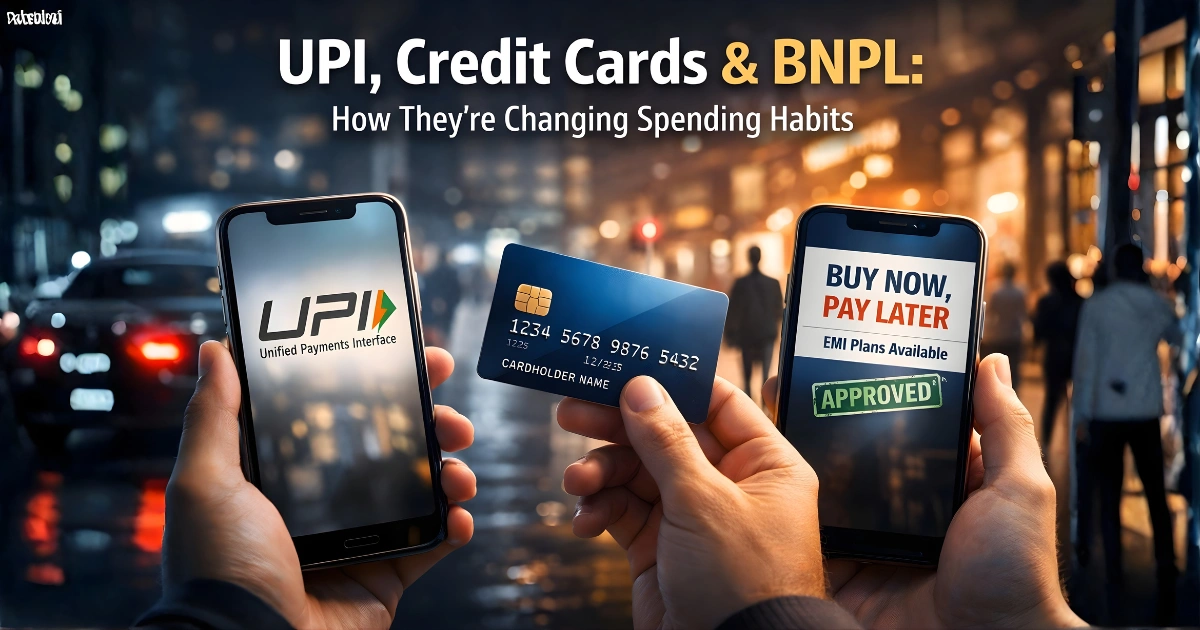
Today, spending in India happens with a tap, a swipe, or a quiet promise to “pay later.” Urbanisation and digitisation have transformed the way India consumes, and at the heart of this shift are three tools most of us use daily without thinking twice: UPI, Credit Cards, and BNPL.
Individually, they look harmless—even convenient. Together, they are reshaping spending patterns, average ticket sizes, and how Indians emotionally relate to money.
Let’s break down what’s really changing.
The Bigger Picture: Urbanisation, Digitisation, and a New Spending Mindset
Urbanisation and digitisation are reshaping India’s consumption landscape in ways that go far beyond convenience. Cities are denser, incomes are more digital, and spending decisions are faster.
Three trends are converging:
-
Everyday payments have gone real-time
-
Credit is no longer reserved for “big” purchases
-
Installments are no longer seen as debt
👉 Context on India’s digital payment boom:
Reserve Bank of India – Payment Systems Statistics
https://www.rbi.org.in/Scripts/Statistics.aspx?head=Payment%20and%20Settlement%20Systems
With UPI crossing 14 billion monthly transactions and BNPL growing at over 150% annually, India isn’t just paying digitally—it’s thinking digitally about money.
UPI: The King of Everyday Spending
UPI didn’t just digitise payments—it removed hesitation.
From ₹10 chai to ₹1,000 groceries, UPI is clearly owning essentials, while credit cards drive aspirational spends.
Why UPI Changed Daily Behaviour
UPI works because it feels like cash without the pain:
-
No wallet balance to check
-
No interest or repayment anxiety
-
Instant confirmation
👉 Why frictionless payments increase spending frequency:
Harvard Business Review – The Psychology of Cashless Spending
https://hbr.org/2021/03/how-cashless-payments-affect-consumer-spending
People now spend more frequently, even if amounts are smaller. This has quietly increased total monthly outflows without triggering the mental “I spent too much” alarm.
Real-life example:
Ordering food twice a week instead of once. Each order feels small. The monthly total doesn’t.
UPI has normalised frictionless spending, especially for essentials and habitual purchases.
Credit Cards: Fuel for Aspirational Spending
Credit cards play a very different psychological role.
While UPI handles the mundane, credit cards step in when spending feels like a reward—electronics, travel, dining, lifestyle upgrades.
This is where average ticket sizes tend to be higher for credit cards and BNPL compared to UPI.
Why Credit Cards Push Bigger Purchases
-
The payment is delayed
-
The full amount isn’t “felt” immediately
-
Rewards and cashback soften guilt
👉 Why delayed payments reduce spending pain:
Investopedia – Mental Accounting Explained
https://www.investopedia.com/terms/m/mentalaccounting.asp
Urban professionals increasingly swipe for things they could pay for via UPI—but don’t want to feel today.
Pattern to notice:
UPI = frequency
Credit Cards = value
This is exactly why average transaction sizes are larger on cards and why aspirational consumption has accelerated in urban India.
BNPL: The Most Dangerous Payment Innovation (If Misused)
Buy Now, Pay Later sounds innocent. Almost friendly.
That’s the problem.
A substantial portion of young users view BNPL as a mere “payment option,” not as credit. But BNPL systems increase consumer spending more aggressively than almost any other payment method.
How BNPL Quietly Increases Spending
-
No upfront payment pain
-
Small EMIs feel harmless
-
Multiple BNPL apps stack invisibly
👉 BNPL impact on consumer behaviour:
McKinsey – Buy Now, Pay Later: The New Credit Trap
https://www.mckinsey.com/industries/financial-services/our-insights/buy-now-pay-later-five-business-models-to-compete
Consumers who adopt BNPL often spend more per checkout and shop more impulsively—especially online.
Real-life example:
A ₹6,000 purchase feels “cheap” when shown as ₹1,000 × 6 months.
The danger isn’t the installment.
It’s forgetting how many installments you already have.
👉 India-specific BNPL risk reporting:
The Economic Times – BNPL and Rising Hidden Debt
https://economictimes.indiatimes.com
Reports cited by The Economic Times and SiliconIndia consistently point to rising hidden debt among first-time BNPL users—especially under 30.
How These Three Together Are Changing Spending Patterns
Individually, UPI, Credit Cards, and BNPL serve different needs. Together, they reshape behaviour in powerful ways.
What’s Actually Happening
-
Higher frequency due to UPI
-
Higher ticket sizes due to Credit Cards
-
Higher impulse buys due to BNPL
👉 Digital payments & consumption linkage:
World Economic Forum – Digital Payments and Consumer Behaviour
https://www.weforum.org
This blend of immediate gratification with delayed payment has increased digital adoption and overall consumption—but also blurred the line between spending and borrowing.
Urbanisation and digitisation have transformed the way India consumes, but they’ve also transformed how easily people lose track of money.
Common Mistakes Most People Don’t Realise They’re Making
These aren’t reckless decisions. They’re subtle habits.
-
Treating BNPL like cash instead of credit
-
Using credit cards for lifestyle inflation, not convenience
-
Never tracking total monthly outflow—only account balances
-
Assuming small digital payments don’t add up
👉 Behavioural finance bias behind these mistakes:
https://www.investopedia.com/terms/b/behavioralfinance.asp
The system is designed to feel painless.
That doesn’t mean it’s harmless.
Smart Action Steps to Stay in Control
You don’t need to stop using these tools. You need rules.
Practical Money Rules That Actually Work
-
UPI rule: Weekly spending cap for non-essentials
-
Credit card rule: One card, one purpose (travel, fuel, or lifestyle)
-
BNPL rule: Never more than 2 active plans at once
Pro Tips Most People Miss
-
Check BNPL obligations like EMIs, not expenses
-
Review monthly payment methods, not just categories
-
If you wouldn’t buy it in cash today, rethink buying it on credit
👉 Why payment method audits matter:
https://www.investopedia.com/articles/personal-finance/090816/how-to-control-impulse-spending.asp
These habits don’t reduce lifestyle—they protect it.
The Bottom Line: Convenience Isn’t Free
UPI, Credit Cards, and BNPL have made India faster, more connected, and more consumption-driven.
They’ve also made overspending quieter.
Urbanisation and digitisation are irreversible. The real choice is whether you stay aware while enjoying the convenience—or wake up later wondering where your money went.
Use the tools.
Don’t let the tools use you.