Introduction: The Price You Pay for “Cheap Data” Is About to Change
For years, Indians have enjoyed some of the cheapest mobile data in the world.
Unlimited calls. Daily data packs. Monthly plans that cost less than a pizza.
So cheap, in fact, that many of us stopped checking our recharge amount altogether.
That comfort may soon end.
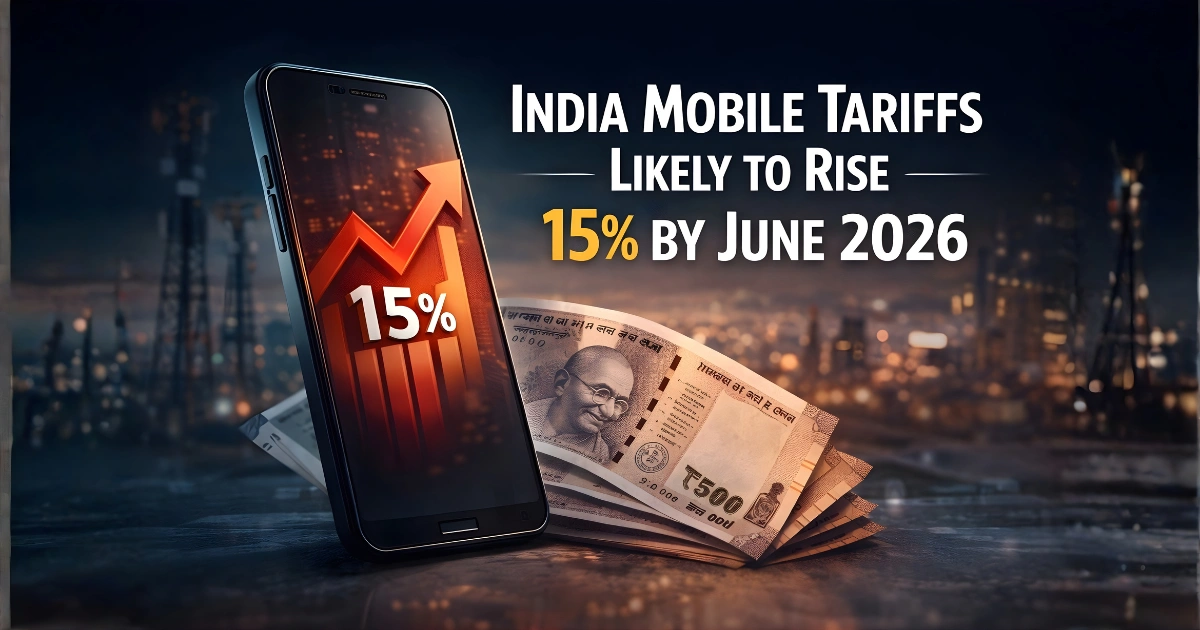
According to industry analysts, Indian telecom operators are preparing to raise mobile tariffs by around 15% in June 2026, nearly two years after the last major tariff hike. The move is being described as inevitable, not optional.
And no — this isn’t just speculation.
“We expect mobile tariffs in India to rise by 15 per cent in June 2026, two years after the last tariff hikes — in line with trends in the past,” the report said.
This means higher phone bills for millions of users — whether you’re on prepaid, postpaid, or bundled family plans.
Let’s break down why tariffs are raised, who will lead the hike, how much more you may pay, and what you can do before it hits your wallet.
Analysts Predict Indian Mobile Tariffs Will Rise 15% by June 2026
The expectation of a tariff hike isn’t coming from telecom companies alone. It’s coming from market analysts, brokerage firms, and telecom industry watchers who closely track revenue cycles, ARPU trends, and capital expenditure.
Why June 2026 Matters
-
The last major tariff hikes were implemented around late 2023–early 2024
-
Historically, Indian telecom operators revise tariffs every 2–3 years
-
Revenue pressure, rising costs, and 5G capex cycles now align
In simple terms:
👉 The timing fits the pattern.
Analysts predict Indian mobile tariffs will rise 15% by June 2026 because operators need healthier cash flows to survive, invest, and remain competitive.
Why Telecom Operators Are Raising Tariffs Again
To consumers, a price hike feels unfair.
To telecom companies, it’s survival.
Let’s look at the real reasons behind the move.
1. India’s Telecom Business Runs on Thin Margins
Despite massive subscriber bases, India’s leading telecom providers operate on razor-thin margins.
-
Data prices are among the lowest globally
-
Average Revenue Per User (ARPU) remains far below global benchmarks
-
Network and spectrum costs keep rising
According to industry data published by Telecom Regulatory Authority of India, ARPU in India is still significantly lower than markets like the US or Europe.
👉 https://www.trai.gov.in/release-publication/reports/telecom-subscriptions-reports
In many cases, companies are spending more on infrastructure than they earn from users.
Tariffs are raised not because companies want to — but because they have to.
2. 5G Rollout Isn’t Cheap
The 5G experience doesn’t run on goodwill.
It requires:
-
Spectrum payments
-
Network densification
-
New towers and fiber rollout
-
Higher power and maintenance costs
Every major telecom operator is investing billions into 5G expansion. That money has to come from somewhere.
Eventually, it comes from users.
3. Debt Pressure and Financial Sustainability
India’s telecom sector has already seen what happens when pricing stays irrational.
-
Multiple operators exited the market
-
Competition shrank to a few large players
-
Debt piled up across balance sheets
A controlled tariff hike is widely seen as better than another industry collapse.
Who Will Lead the Tariff Hike?
Historically, one player moves first — others follow.
This time, the spotlight is on Reliance Jio.
A Hike of 10–20% in Mobile Tariff by Jio to Push Industry Higher
Analysts expect:
-
Jio may lead with a 10–20% tariff hike
-
Other operators to follow within weeks
-
Similar pricing adjustments across prepaid and postpaid plans
Why Jio?
Because:
-
It has the largest subscriber base in India
-
It sets industry pricing benchmarks
-
It is focused on steadily improving ARPU
Once Jio moves, the rest usually align.
You can track Jio’s current plan structures here:
👉 https://www.jio.com/selfcare/plans/mobility/
What About Other Telecom Operators?
India currently has three major private telecom operators.
1. Bharti Airtel
Airtel has already signaled its preference for premium pricing and higher-value users.
-
Less aggressive on discounts
-
Strong postpaid and family plans
-
Likely to match or slightly exceed Jio’s hikes
Airtel’s strategy focuses on quality of service rather than lowest pricing:
👉 https://www.airtel.in/mobile-postpaid/
2. Vodafone Idea
Vodafone Idea is under the most financial stress.
-
Tariff hikes are critical for survival
-
Any increase directly improves cash flow
-
Likely to follow market leaders closely
For Vi, tariffs being raised is less about growth — more about staying alive.
👉 https://www.myvi.in/prepaid-plans
How Much More Will You Actually Pay?
A 15% hike sounds abstract. Let’s put it into real numbers.
Example: Prepaid User
-
Current plan: ₹299/month
-
After 15% hike: ~₹345/month
That’s ₹46 more per month, or ₹550+ per year.
Example: Postpaid Family Plan
-
Current plan: ₹999/month
-
After 15% hike: ~₹1,150/month
That’s ₹1,800 extra per year.
Small monthly increases feel harmless — until you add them up.
Mistakes Consumers Will Make During Tariff Hikes
When tariffs are raised, most users react late — and pay more than they should.
Common Mistakes to Avoid
-
Waiting until the hike is implemented
-
Ignoring long-term or bundled plans
-
Not reviewing usage vs plan value
-
Switching operators impulsively
Price hikes reward prepared users, not reactive ones.
Action Steps: What You Should Do Before June 2026
You don’t need to panic. You need a plan.
1. Lock in Long-Term Plans Early
Many operators allow:
-
Annual prepaid plans
-
Family postpaid bundles
-
Add-on benefits locked at current prices
If you lock in before the hike, you delay the impact by 12 months or more.
2. Re-evaluate Your Actual Usage
Ask yourself:
-
Do you really use all that data?
-
Are you paying for OTT subscriptions you don’t watch?
Downgrading before prices rise is smarter than cutting after.
3. Watch for “Silent” Plan Changes
Sometimes tariffs are raised without changing the headline price:
-
Reduced data
-
Shorter validity
-
Fewer bundled benefits
Always read the fine print.
Pro Tips Most Users Miss
-
Postpaid users often get better value during hikes
-
Family plans dilute per-user cost
-
Secondary SIMs become expensive fast after hikes
If you’re carrying two numbers, this is the time to rethink that habit.
Will Tariffs Keep Rising After 2026?
Very likely — but gradually.
Most analysts believe:
-
India is moving toward sustainable telecom pricing
-
Sharp price wars are unlikely to return
-
ARPU growth is a long-term industry goal
That means periodic hikes, not sudden shocks.
Final Thoughts: Cheap Data Was a Phase — Not a Promise
The era of ultra-cheap mobile tariffs was always temporary.
Now, Indian telecom operators are resetting prices to reflect economic reality.
Yes, mobile bills will rise.
Yes, users will feel it.
But this also means:
-
Better networks
-
Faster 5G expansion
-
A more stable telecom industry
The smart move isn’t complaining after tariffs are raised.
It’s preparing before they are.
👉 Review your plans.
👉 Lock in value early.
👉 Don’t wait for the SMS announcement.