Most financial disasters don’t happen overnight. They build slowly, quietly, and almost invisibly. One small swipe of a card. One “I’ll pay it off next month.” One purchase that feels harmless in the moment.
Then one day, reality hits — and you realise that a single bad money habit has snowballed into stress, debt, and a future that feels trapped instead of secure.
The truth is simple but uncomfortable:
The most destructive financial habit isn’t lack of income — it’s spending more than you earn, month after month.
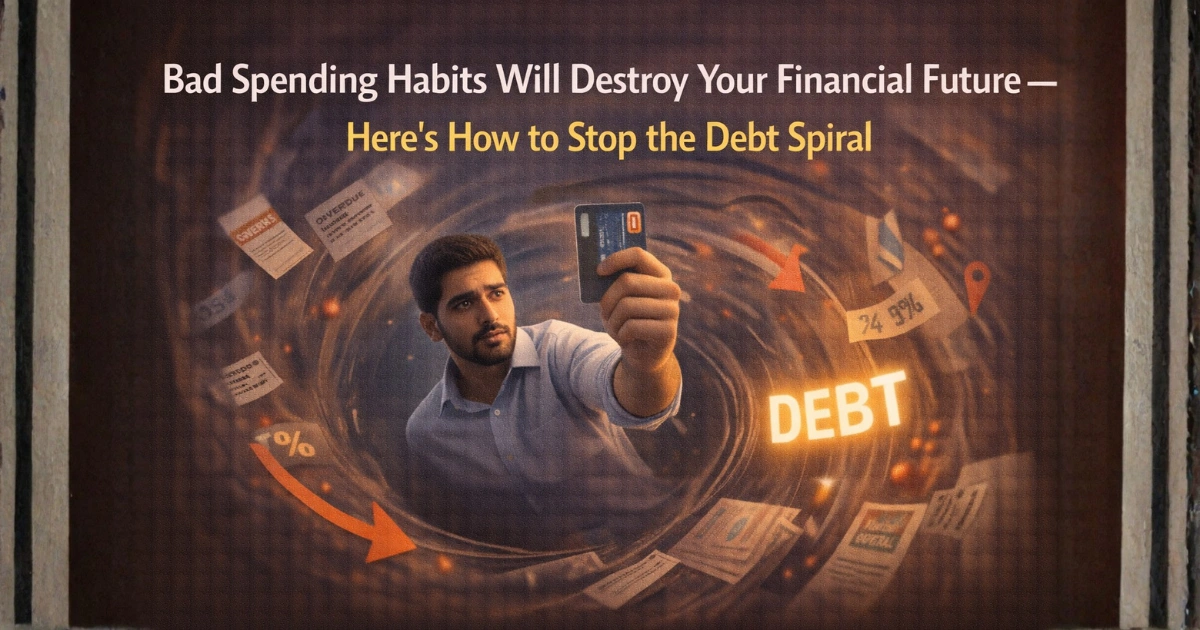
Once that cycle begins, it creates The Debt Spiral — a chain reaction that affects every part of your life, from your mental health to your long-term opportunities.
If you want a deeper explanation of how debt traps form, this overview from the OECD Financial Consumer Protection body is insightful:
👉 https://www.oecd.org/finance/financial-education/consumer-protection-and-over-indebtedness.htm
This isn’t about guilt or fear. It’s about understanding how one pattern of behaviour can quietly shape your entire future — and how you can break out of it before it’s too late.
Let’s unpack how it happens, why it’s so dangerous, and the practical steps to regain control.
The Habit That Starts It All — Spending More Than You Earn
At first, it doesn’t feel like a problem.
You use credit for convenience. You buy now and plan to sort it out later. You justify it because everyone around you seems to be doing the same.
But over time, bad money habits and unnecessary expenses become a routine.
The issue isn’t just the spending — it’s what follows next.
The moment expenses exceed income, you dip into credit. And once you rely on credit to sustain a lifestyle, you step directly into The Debt Spiral.
To understand why this behaviour feels normal but turns dangerous, here’s a helpful explainer on lifestyle inflation and overspending psychology:
👉 https://www.investopedia.com/terms/l/lifestyle-inflation.asp
What Is The Debt Spiral?
The Debt Spiral is a financial loop that looks like this:
You spend more than you earn
You borrow to cover the gap
Interest builds
Monthly payments increase
Savings disappear
You borrow again because cash flow shrinks
And slowly, debt stops being an inconvenience and becomes a way of life.
That’s where real damage begins — especially with high-interest credit card balances. The Consumer Financial Protection Bureau breaks down how compounding interest traps borrowers:
👉 https://www.consumerfinance.gov/ask-cfpb/how-do-credit-card-interest-charges-work-en-102/
The Domino Effect — How One Habit Destroys Your Financial Future
Overspending does more than increase debt. It affects every layer of your life and money decisions.
The Opportunity Cost of Wasted Funds
Every rupee spent on impulse purchases, subscriptions you don’t use, or lifestyle upgrades you can’t afford has a hidden price:
It’s money that never gets invested, never grows, and never works for your future.
Instead of building assets, that money services EMI, interest, and late fees.
That’s The Opportunity Cost of Wasted Funds — the wealth you could have created but silently lost. For a simple breakdown of opportunity cost in personal finance:
👉 https://www.investopedia.com/terms/o/opportunitycost.asp
Years later, the gap becomes painfully visible:
Others build savings while you service debt
Others invest while you catch up on bills
Others move forward while you stay stuck financially
Not because you lacked income — but because lack of financial discipline redirected your money in the wrong direction.
Increased Financial Stress and Instability
Money stress doesn’t just affect your wallet — it affects your peace of mind.
Overspending leads to:
Constant worry about due dates
Anxiety when unexpected expenses appear
Strained relationships and arguments about money
Fear of job loss or emergencies
A lingering sense of instability
The American Psychological Association has repeatedly linked debt to heightened anxiety and emotional strain:
👉 https://www.apa.org/news/press/releases/stress/2019/stress-money
Debt isn’t just a financial burden — it becomes a psychological one.
When Spending Turns Into Self-Sabotage
Bad spending habits rarely feel destructive at first.
They feel like:
Rewards after a long week
Comfort
Deserved treats
“Just this once” decisions
But gradually, patterns form:
You spend to look successful
You avoid discomfort instead of confronting money problems
You tell yourself you’ll fix it later
And without realising it…
Bad Spending Habits Will Destroy Your Financial Future if they go unchecked.
Not because of one purchase — but because habits multiply over time.
Real-Life Example — How Small Decisions Snowball
Meet Arjun.
He earns a decent income. Not rich, not struggling — comfortably middle-class.
One year, he upgrades his phone on EMI. Then a streaming bundle. Then a frequent-dining lifestyle. Nothing extreme — just small choices.
Soon:
Credit card balances don’t clear fully
Interest builds
Emergency savings remain zero
Then one medical bill arrives.
He doesn’t have savings to cover it — so he borrows again.
Arjun didn’t fail because of one big mistake.
He fell into The Debt Spiral because small, repeated habits grew faster than his financial discipline.
That’s how most financial crises start — quietly.
Warning Signs You’re Slipping Into a Debt-Driven Lifestyle
If these feel familiar, it’s time to pause and reassess:
You rely on credit cards to get through the month
Your EMIs keep increasing, but savings don’t
You can’t handle emergencies without borrowing
Purchases are emotional, not intentional
You avoid checking your bank statements
You feel guilty after spending — but repeat it anyway
None of this makes you irresponsible or incapable.
It simply means your money habits need a reset.
Action Steps — How to Break Out of The Debt Spiral
You don’t need perfection or drastic sacrifice. You need clear priorities and consistent action.
Step 1 — Stop the Leak Before You Fix the Damage
Before repaying debt, pause new spending habits.
Cancel unused subscriptions
Cut impulse and lifestyle expenses
Delay non-essential purchases
For practical guidance on cutting unnecessary spending, this resource is helpful:
👉 https://www.moneyhelper.org.uk/en/everyday-money/budgeting/how-to-reduce-your-spending
Every saved rupee helps you rebuild control.
Step 2 — Track Where Your Money Actually Goes
Awareness changes behaviour.
Create a simple monthly breakdown:
Essentials
Commitments (EMIs, rent, utilities)
Discretionary spending
Savings/investments
A beginner budgeting guide to get started:
👉 https://www.investopedia.com/articles/pf/12/budgeting-basics.asp
Patterns reveal themselves quickly — especially bad money habits and unnecessary expenses.
Step 3 — Build a Small Emergency Fund First
Even while clearing debt, keep aside a small safety cushion.
Why? Because emergencies without savings force you back into borrowing — restarting The Debt Spiral.
Here’s a practical emergency-fund explainer:
👉 https://www.nerdwallet.com/article/banking/emergency-fund
Stability comes before acceleration.
Step 4 — Prioritise High-Interest Debt
Focus on debts that hurt the most:
Credit cards
Payday loans
Overdraft fees
Reduce them first. Every drop in interest reduces future pressure. The debt avalanche and snowball methods are explained here:
👉 https://www.consumerfinance.gov/consumer-tools/debt-collection/strategies-for-paying-off-debt/
Step 5 — Rebuild Financial Discipline Step by Step
Wealth grows from habit, not luck.
Spend intentionally
Save consistently
Invest early when possible
Set boundaries on lifestyle expenses
If you want a deeper perspective on mindset and long-term financial behaviour:
👉 https://www.morganhousel.com/psychology-of-money
It isn’t glamorous — but it’s powerful.
Common Mistakes People Make When Trying to Recover
Avoid these traps:
Repeating overspending “after paying debt”
Using personal loans to clear credit cards without habit change
Thinking higher income alone will solve money problems
Ignoring emotional triggers behind spending
Chasing shortcuts instead of discipline
Financial recovery is not punishment — it’s a rebuild.
Pro Tips for Staying Out of Financial Trouble
Make spending decisions after a cooling-off period
Separate emotional stress from financial choices
Automate savings so you don’t “forget” to set aside money
Track progress regularly — small wins matter
Surround yourself with people who prioritise stability over show-off spending
Your future will thank the version of you who chooses discipline today.
Conclusion — One Habit Can Break You, But One Decision Can Save You
Yes, one destructive habit can derail your financial journey.
But here’s the hopeful truth:
Your debt, bad habits, and poor financial planning do not have to hold you back.
Change doesn’t come from shame. It comes from awareness, responsibility, and the courage to rewrite your behaviour.
Even if Bad Spending Habits Will Destroy Your Financial Future unless you act, you still have time to shift direction.
Start small. Reduce the leaks. Rebuild habits that protect your future, not sabotage it.
Your financial life isn’t defined by past choices — it’s shaped by what you decide to do next.
Take the first step today. Review your habits. Break the cycle. Protect your future before the spiral grows deeper.